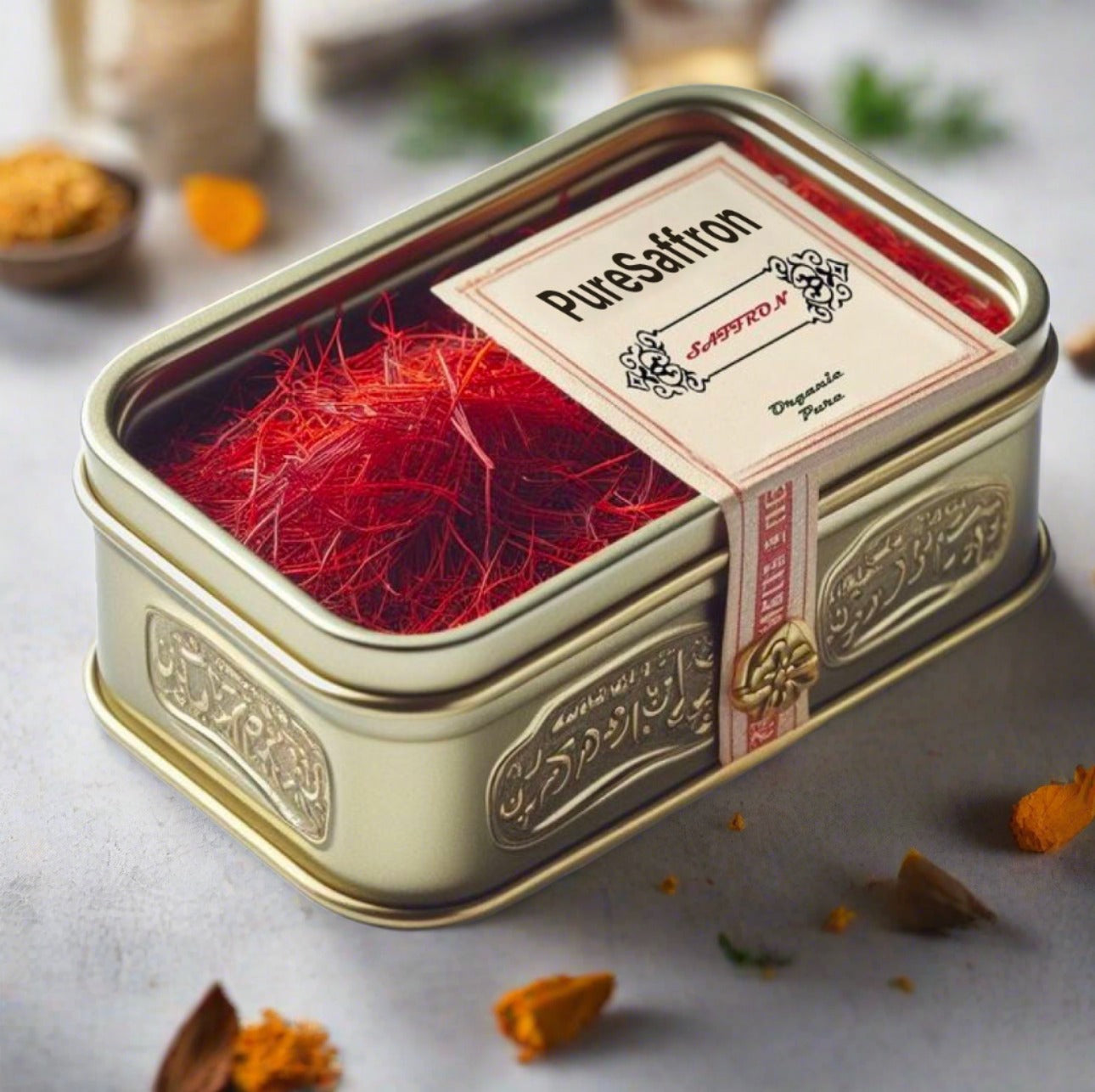
Adulteration Playbook: The 12 Most Common Saffron Fakes and How They Work
Ara OhanianShare
The most common saffron adulterants fall into three categories: plant-based substitutes (safflower, marigold, turmeric, corn silk), synthetic dyes (tartrazine, Sudan I–IV, sunset yellow), and weight-increasing agents (glycerin, sugar syrup, salt, mineral oil). A 2023 systematic review in Food Control found that 20–30% of commercial saffron globally contains some form of adulteration, with rates varying from roughly 3.5% in regulated EU markets to over 60% in regions with weaker enforcement. Understanding exactly how each fake works — what it mimics, what it cannot replicate, and which test catches it — is the only way to protect yourself as a buyer.
Why Saffron Attracts More Fraud Than Any Other Spice
Saffron has been adulterated for over six centuries. The economics are straightforward: genuine saffron requires 150,000–200,000 hand-picked Crocus sativus flowers to produce one kilogram of dried stigmas, making it the world’s most expensive spice by weight. When retail prices reach $5,000–$15,000 per kilogram, even small amounts of filler generate significant profit. (For the full picture of why the real production cost is so high, see why saffron is so expensive.) Powdered saffron is especially vulnerable because visual inspection becomes nearly impossible once threads are ground — a reality that motivated the ISO 3632 standard to require spectrophotometric testing as the primary quality gate.
The standard ISO/TS 3632-2 testing method cannot detect the addition of up to 10–20% (by weight) of certain adulterants, according to research published in Food Chemistry. This detection gap means that even “ISO-tested” saffron can contain economically significant levels of contamination. Closing that gap requires understanding the specific adulterants in play.
Category 1: Plant-Based Substitutes — The Botanical Imposters
1. Safflower (Carthamus tinctorius)
Safflower is the single most common saffron adulterant worldwide. The dried petals are naturally red-orange, similar in color to saffron threads, and cost less than $10 per kilogram — roughly 1/500th the price of genuine saffron. Fraudsters mix safflower petals into whole-thread saffron or blend safflower powder into ground saffron. The tell: safflower produces a bright yellow color in water but lacks saffron’s distinctive bitter-sweet flavor (picrocrocin) and hay-like aroma (safranal). A spectrophotometry test will show a weak or absent A257 reading despite potentially acceptable A440 values, because safflower’s yellow pigment absorbs at similar wavelengths to crocin but contributes nothing to the picrocrocin or safranal readings.
Detection: Visual inspection under magnification (safflower petals are flat and uniform, unlike saffron’s trumpet-shaped stigma tips), HPLC separation of pigment compounds, and the picrocrocin/safranal ratio test. If A440 is high but A257 is disproportionately low, the sample likely contains color-boosting adulterants.
2. Marigold (Calendula officinalis)
Calendula petals share saffron’s yellow-orange color palette and are sometimes dried, shredded, and mixed with saffron threads to increase volume. Marigold is primarily used in powdered saffron fraud because whole calendula petals look noticeably different from saffron stigmas. The petals contain their own carotenoids, which can partially inflate spectrophotometry readings at 440nm. However, marigold contributes zero picrocrocin and zero safranal — making the A257 and A330 readings the most reliable screens.
Detection: HPLC can identify calendula-specific marker compounds at concentrations as low as 5% by weight. Microscopy reveals calendula’s distinct petal cell structure. DNA barcoding can confirm the presence of Calendula DNA in mixed samples.
3. Turmeric (Curcuma longa)
Turmeric powder is almost exclusively added to ground saffron, where its intense yellow-orange color masks the dilution. At $5–$15 per kilogram, turmeric is one of the cheapest and most accessible adulterants. HPLC studies have shown that turmeric can be detected at concentrations as low as 2% by weight through its characteristic curcumin peaks, which are absent in genuine saffron. The flavor profile is completely different — turmeric is earthy and peppery, lacking saffron’s distinctive bitter-sweet character — but in small percentages mixed with real saffron, the flavor difference may not be obvious in a finished dish.
Detection: Curcumin has distinct UV absorption peaks that HPLC separates cleanly from crocin. TLC (thin-layer chromatography) shows turmeric as a separate spot. The simplest home indicator: turmeric-adulterated saffron powder in water often shows an immediate, uniform yellow with no gradual diffusion — real saffron threads release color slowly over 10–15 minutes.
4. Corn Silk (Zea mays Stigmas)
Corn silk — the thread-like strands from corn ears — is dyed red or orange and mixed into whole-thread saffron. This adulterant exploits the visual similarity between corn silk fibers and saffron stigmas. Dyed corn silk can be surprisingly convincing at first glance, especially when mixed at 10–20% ratios with genuine threads. The giveaway: corn silk lacks any flavor or aroma compounds. In water, the synthetic dye used on corn silk typically releases instantly (within seconds), while genuine saffron releases its color gradually over minutes.
Detection: Microscopy reveals corn silk’s different cellular structure. DNA testing identifies Zea mays genetic material. If the dye used on corn silk is synthetic (tartrazine or sunset yellow), HPLC will identify it immediately.
5. Pomegranate Fibers
Dried, shredded pomegranate fruit fibers — sometimes from the rind, sometimes from the arils — are dyed and mixed into thread saffron. This adulterant is less common than safflower but appears regularly in markets across South and Central Asia. The fibers can be dyed to match saffron’s red color, and their thread-like shape after shredding makes visual detection difficult without magnification.
Detection: Pomegranate fibers absorb water differently than saffron stigmas and tend to become soft and pulpy when soaked, while genuine saffron threads retain their structure. Microscopy and DNA testing are definitive.
6. Crocus vernus Stigmas (Spring Crocus)
This is one of the more sophisticated botanical adulterants. Crocus vernus is a close relative of Crocus sativus (saffron crocus), and its stigmas look remarkably similar. However, C. vernus stigmas contain none of the crocin, picrocrocin, or safranal that define saffron quality. Because the two species are closely related, some DNA tests using only single barcode regions may struggle to distinguish them — making this adulterant particularly difficult to catch with basic molecular methods.
Detection: Spectrophotometry will show dramatically lower values across all three wavelengths. Multi-locus DNA barcoding using ITS2 combined with matK or trnH-psbA can differentiate the species. HPLC readily shows the absence of crocin and picrocrocin.
Category 2: Synthetic Dyes — The Color Cheats
Synthetic dyes represent the most dangerous category of saffron adulterants because several are classified as potentially carcinogenic. A 2023 review in Food Control identified the following dyes as the most frequently detected in adulterated saffron samples worldwide:
7. Tartrazine (E102 / FD&C Yellow No. 5)
Tartrazine is a lemon-yellow synthetic azo dye that absorbs at wavelengths similar to crocin (around 425–430nm). This spectral overlap is precisely why it is used: tartrazine can inflate A440 spectrophotometry readings, making adulterated saffron appear to have stronger coloring power than it actually does. A saffron sample adulterated with tartrazine might test at a respectable A440 of 200 under standard ISO 3632 UV-Vis testing — while the actual crocin content is significantly lower.
Detection: HPLC with photodiode array (PDA) detection cleanly separates tartrazine from crocin based on their different retention times and UV absorption spectra. FTIR spectroscopy combined with chemometric analysis can also identify tartrazine in saffron matrices.
8. Sudan Dyes (I, II, III, IV)
Sudan dyes are fat-soluble synthetic azo dyes that are banned as food additives in the EU, US, and most regulated markets due to their classification as Category 3 carcinogens by the International Agency for Research on Cancer (IARC). Despite this, Sudan dyes — particularly Sudan I and Sudan IV — continue to appear in adulterated saffron, especially in powdered form. Sudan dyes produce intense red and orange colors that mimic saffron’s visual appearance.
Detection: HPLC-MS/MS (liquid chromatography tandem mass spectrometry) is the gold standard for Sudan dye detection, with limits of detection in the parts-per-billion range. This is a test that every reputable Certificate of Analysis for saffron should address.
9. Sunset Yellow (E110 / FD&C Yellow No. 6)
Another synthetic azo dye, sunset yellow produces an orange color that blends visually with saffron when applied to fibers or mixed into powder. It is permitted as a food colorant in some jurisdictions at controlled levels, but its undeclared presence in saffron constitutes food fraud regardless of regulatory status. Like tartrazine, sunset yellow absorbs in the visible spectrum near saffron’s crocin wavelength, potentially inflating A440 values.
Detection: HPLC and FTIR spectroscopy both identify sunset yellow reliably. TLC also separates it from natural saffron pigments.
10. Rhodamine B
Rhodamine B is a fluorescent synthetic dye that produces a vivid reddish-pink color. It is classified as a potential carcinogen and is banned in food products in most countries. Its use in saffron adulteration is particularly concerning because it is extremely potent — tiny amounts produce intense color — and it can be difficult to detect visually when mixed with genuine saffron pigments. Rhodamine B has been found in saffron samples from multiple countries.
Detection: Fluorescence spectroscopy can screen for Rhodamine B due to its characteristic fluorescence emission. HPLC-MS provides definitive identification and quantification.
Category 3: Weight-Increasing Agents — The Invisible Filler
This category of fraud does not replace saffron — it makes existing saffron heavier. Because saffron is sold by weight, even small increases in moisture or added substances can generate significant extra revenue across large batches.
11. Glycerin, Honey, and Sugar Syrup
Saffron threads are dipped in or sprayed with glycerin, honey, or sugar syrup and then redried to a point where they feel normal to the touch but weigh 20–40% more than untreated threads. The sugar or glycerin coating also gives threads a slightly glossy appearance that some fraudsters market as a sign of “freshness.” This adulterant is insidious because the saffron itself is genuine — you are simply paying saffron prices for sugar water.
Detection: ISO 3632 includes a loss-on-drying test requiring filament saffron to contain less than 12% moisture. Glycerin-treated saffron typically fails this test. The threads also tend to clump together more than untreated saffron and may feel slightly tacky. Refractometry can detect elevated sugar content in the saffron extract.
12. Mineral Oil and Salt
Less common but documented: saffron threads are treated with mineral oil (to add weight and sheen) or mixed with fine salt or barium sulfate (in powdered saffron) to increase weight. Salt addition is particularly common in ground saffron sold in bulk, where a 10–15% salt content can go unnoticed in a spice that is used in small quantities. Mineral oil treatment adds weight while giving threads an artificially “premium” sheen that inexperienced buyers may interpret as quality.
Detection: Ash content testing (ISO 3632 sets maximum ash content limits) catches salt and mineral additives. Total ash above 8% for filament saffron indicates inorganic contamination. Oil treatment can be detected through fat extraction and gravimetric analysis.
The Detection Toolkit: Which Test Catches Which Fake
| Adulterant | UV-Vis Spectrophotometry | HPLC | DNA Testing | Microscopy | Best First-Line Test |
|---|---|---|---|---|---|
| Safflower | Partial (low A257/A330) | Yes (marker compounds) | Yes | Yes | HPLC + microscopy |
| Marigold | Partial (low A257/A330) | Yes (at ≥5%) | Yes | Yes | HPLC + DNA |
| Turmeric | No (only in powder) | Yes (curcumin peaks) | Yes | Limited | HPLC |
| Corn silk (dyed) | Varies by dye used | Yes (identifies dye) | Yes | Yes | Microscopy + HPLC |
| Pomegranate fiber | No | Limited | Yes | Yes | DNA + microscopy |
| Crocus vernus | Yes (all values low) | Yes (no crocin) | Multi-locus only | Difficult | Spectrophotometry + HPLC |
| Tartrazine | No (inflates A440) | Yes (definitive) | N/A | N/A | HPLC-PDA |
| Sudan dyes | Partial | Yes (definitive) | N/A | N/A | HPLC-MS/MS |
| Sunset yellow | No (inflates A440) | Yes (definitive) | N/A | N/A | HPLC + FTIR |
| Rhodamine B | Partial | Yes (definitive) | N/A | N/A | HPLC-MS + fluorescence |
| Glycerin/syrup | No | No | N/A | N/A | Loss-on-drying (moisture) |
| Salt/mineral oil | No | No | N/A | N/A | Ash content + fat extraction |
The pattern is clear: no single test catches everything. UV-Vis spectrophotometry — the foundation of ISO 3632 grading — is excellent for measuring genuine saffron quality but can be actively fooled by synthetic dyes that absorb at similar wavelengths. HPLC is the most versatile single detection tool, capable of identifying both natural and synthetic adulterants, but it requires laboratory equipment and trained analysts. DNA testing catches botanical imposters but is blind to chemical adulterants.
A Buyer’s Five-Point Fraud Screen
You do not need a laboratory to reduce your fraud risk. Here is a practical framework that eliminates most adulterated saffron before you buy:
1. Demand a Certificate of Analysis. Any reputable saffron supplier provides a COA from an ISO 17025-accredited laboratory. The COA should include spectrophotometry values (A440, A257, A330), moisture content, and ideally an adulterant screen. If the supplier cannot provide a COA, that tells you everything.
2. Check the A440/A257 ratio. Genuine high-quality saffron shows strong values across both crocin (A440) and picrocrocin (A257). A sample with A440 above 200 but A257 below 55 is suspicious — high color with weak flavor often indicates color-boosting adulterants or an artificial pigment inflating the crocin reading.
3. Buy threads, not powder. Powdered saffron is dramatically easier to adulterate because visual inspection becomes impossible. The majority of saffron fraud occurs in the powdered market. Whole stigma threads — especially high-cut grades like Super Negin or Sargol — are harder to fake because their morphology is distinctive and visible.
4. Test the water release. While the water test has real limitations (it cannot distinguish high-quality from excellent-quality saffron), it can catch crude fakes. Genuine saffron threads release color gradually over 10–15 minutes in room-temperature water and retain their red color for hours. Dyed adulterants typically release color instantly and the threads themselves lose color quickly, turning pale or white within minutes.
5. Evaluate the price. Genuine saffron has a production cost floor. If a seller offers “premium” saffron significantly below market price — say, below $4–$5 per gram at retail — the economics suggest adulteration. Quality saffron from reputable sources like PureSaffron reflects the actual cost of hand-harvested, lab-tested stigmas.
Health Risks: Why Saffron Adulteration Is Not Just an Economic Problem
Some saffron adulterants pose genuine health risks beyond economic fraud. Sudan dyes (I–IV) are classified as Category 3 carcinogens — meaning they are “possibly carcinogenic to humans” based on evidence from animal studies. Rhodamine B is also classified as a potential carcinogen. These substances have no business in food products, and their presence in saffron represents a food safety violation, not merely a quality issue.
Even “safer” synthetic dyes like tartrazine and sunset yellow can trigger allergic reactions in sensitive individuals, particularly those with aspirin sensitivity or pre-existing allergic conditions. The problem is compounded by the fact that these dyes are undeclared — a consumer with a known tartrazine sensitivity would have no reason to suspect its presence in what is sold as pure saffron.
Weight-increasing agents carry lower direct health risks but can create food safety issues: glycerin and sugar coatings increase moisture activity, potentially promoting mold growth during storage. This is why the ISO 3632 moisture limit of 12% exists — it is both a quality standard and a food safety threshold.
Frequently Asked Questions
What are the most common saffron adulterants?
The most common saffron adulterants are safflower petals (Carthamus tinctorius), marigold (Calendula officinalis), turmeric, corn silk dyed with synthetic colorants, and synthetic dyes including tartrazine, sunset yellow, and Sudan dyes. Weight-increasing agents like glycerin, honey, and sugar syrup are also widely used. A 2023 review found that 20–30% of global commercial saffron contains some form of adulteration.
How can I test saffron for fakes at home?
The most accessible home test is the water release test: place a few threads in room-temperature water and observe. Genuine saffron releases golden-yellow color gradually over 10–15 minutes and retains its red thread color for hours. Dyed fakes typically release color instantly and the threads lose color within minutes. However, this test has limitations — it cannot detect sophisticated adulterants mixed at low levels with genuine saffron. For definitive results, request a Certificate of Analysis with spectrophotometry and HPLC data from your supplier.
Is powdered saffron more likely to be adulterated?
Yes, significantly. Powdered saffron is the primary target for adulteration because grinding eliminates the visual characteristics — trumpet-shaped stigma tips, thread width, color gradients — that help identify genuine whole-thread saffron. Turmeric, paprika, synthetic dyes, and salt are all easily blended into saffron powder at undetectable levels. Buying whole stigma threads (Super Negin, Sargol, or Negin grades) substantially reduces adulteration risk.
Can ISO 3632 testing detect all saffron adulterants?
No. Standard ISO 3632 UV-Vis spectrophotometry measures crocin, picrocrocin, and safranal concentrations but cannot detect the addition of up to 10–20% of certain adulterants by weight. Synthetic dyes like tartrazine absorb at wavelengths similar to crocin, potentially inflating A440 readings rather than flagging contamination. A comprehensive adulterant screen requires supplementary methods: HPLC for dye identification, DNA testing for botanical adulterants, and physical testing for weight-increasing agents.
Are synthetic dyes in saffron dangerous?
Some synthetic dyes found in adulterated saffron pose documented health risks. Sudan dyes (I–IV) and Rhodamine B are classified as potential carcinogens and are banned as food additives in the EU, US, and most regulated markets. Even permitted food dyes like tartrazine can trigger allergic reactions in sensitive individuals, particularly those with aspirin sensitivity. The undeclared nature of these adulterants — consumers do not know they are consuming dyes — compounds the risk.
What should I look for in a saffron supplier to avoid adulterated products?
Look for five indicators: (1) batch-specific Certificates of Analysis from ISO 17025-accredited labs like SGS, Eurofins, or Bureau Veritas; (2) spectrophotometry values showing strong and balanced crocin (A440 ≥ 190), picrocrocin (A257 ≥ 70), and safranal (A330 between 20–50); (3) whole stigma threads rather than powder; (4) pricing consistent with genuine production costs (not suspiciously cheap); and (5) transparency about origin, harvest date, and testing methodology. Suppliers like PureSaffron publish lab data for every batch.
Saffron adulteration is not new, but the methods are evolving. The best defense is informed buying: understand what fakes exist, know which tests catch them, and insist on lab data before trusting a “premium” label. Every adulterant in this guide has a detection method — the question is whether your supplier is willing to test for them. Browse PureSaffron’s lab-verified saffron — every batch ships with full spectrophotometry and quality data.