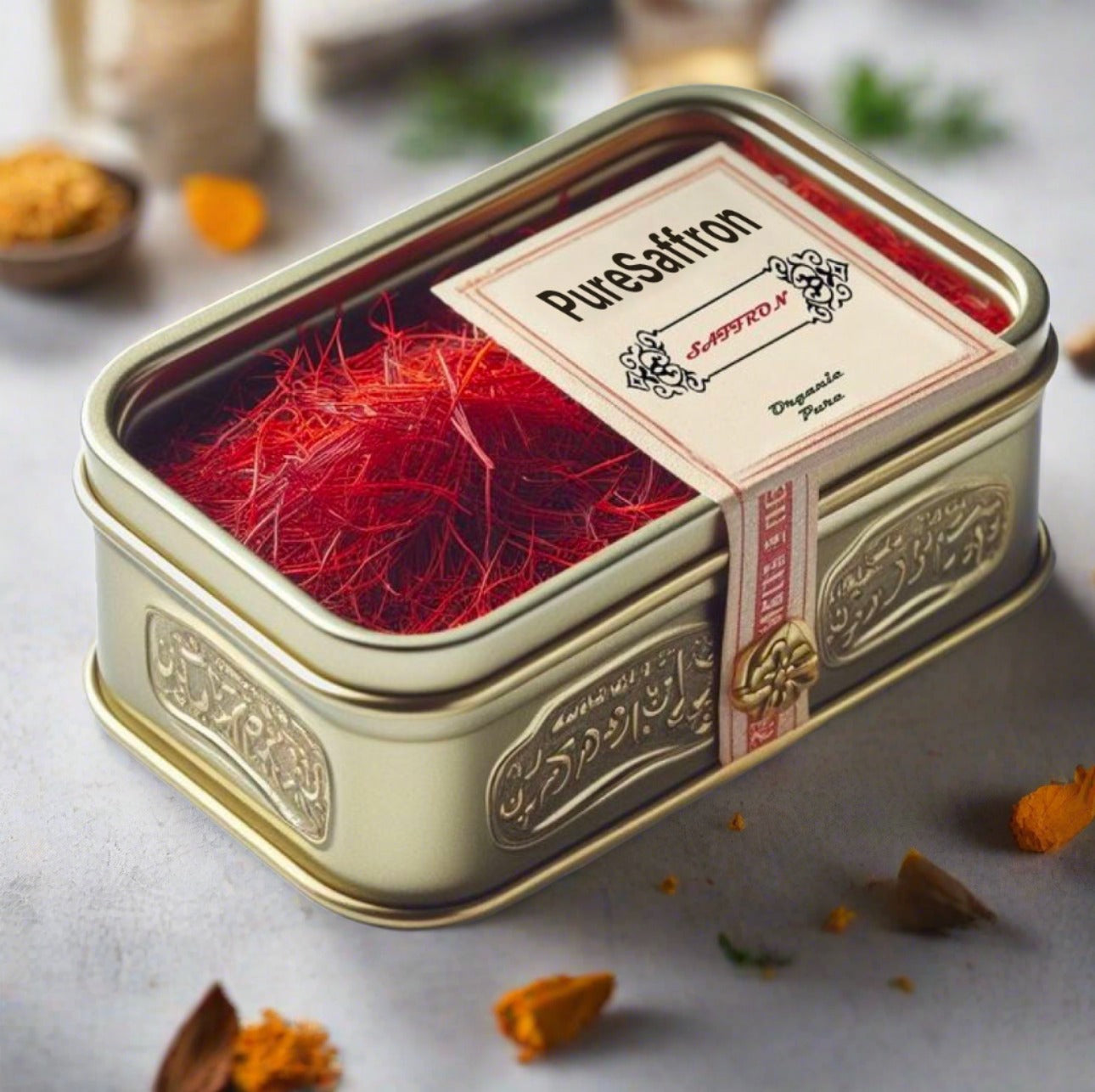
Aroma Retention and Packaging Science: Oxygen Barrier Basics
Ara OhanianShare
Aroma Retention and Packaging Science: Oxygen Barrier Basics
Saffron oxygen barrier packaging determines whether your threads retain their safranal aroma for years or fade to straw-scented mediocrity within months. The difference between a sealed aluminum pouch and a zip-lock bag isn't subtle — it's the difference between an Oxygen Transmission Rate (OTR) below 0.01 cc/m²/24hr and one above 500. That single specification controls how fast crocin degrades, how quickly safranal volatilizes, and whether the saffron you open six months from now smells like anything at all.
This article breaks down the packaging science that protects saffron's three marker compounds — crocin (color), safranal (aroma), and picrocrocin (flavor) — from oxidative degradation. You'll learn which barrier materials actually work, how Modified Atmosphere Packaging (MAP) extends shelf life, and what to look for on packaging before you buy.
Why Oxygen Is Saffron's Worst Enemy After Light
Oxygen drives two destructive reactions in saffron simultaneously. First, it triggers autoxidation of crocin — the carotenoid pigment responsible for saffron's golden color — breaking the conjugated double-bond chain that produces the characteristic A440 absorbance measured under ISO 3632. Second, oxygen accelerates the volatilization and degradation of safranal, the monoterpene aldehyde that creates saffron's signature honey-hay-leather aroma profile measured at A330.
Research published in the Journal of Food Engineering found that saffron stored in oxygen-permeable packaging lost 28-35% of its crocin content within 6 months at room temperature, compared to less than 5% loss in vacuum-sealed containers over the same period. The mechanism is straightforward: molecular oxygen (O₂) attacks the polyene chain of crocin through a free-radical chain reaction, producing colorless degradation products. Meanwhile, safranal — already volatile at room temperature with a boiling point of 70°C — evaporates faster when oxygen displaces it from thread surfaces.
Picrocrocin, the bittering compound measured at A257, is actually the most stable of the three markers. It degrades primarily through hydrolysis (moisture) rather than oxidation, which is why even poorly packaged saffron retains bitterness long after color and aroma have faded. If your saffron tastes bitter but looks pale and smells flat, oxygen exposure is the likely culprit.
The Oxygen Transmission Rate (OTR) Framework for Saffron Packaging
Oxygen Transmission Rate measures how much oxygen passes through a packaging material per unit area per unit time, typically expressed as cc/m²/24hr at standard conditions (23°C, 0% relative humidity). For saffron, lower OTR means better protection. Here's how common packaging materials compare:
| Packaging Material | OTR (cc/m²/24hr) | Saffron Shelf Life Estimate | Relative Cost |
|---|---|---|---|
| Aluminum foil laminate (12μm+) | < 0.01 | 3-5 years | $$ |
| Metalized PET film | 0.5-1.0 | 2-3 years | $$ |
| EVOH multilayer film | 0.01-0.5 (dry) | 2-4 years | $$$ |
| Amber glass with airtight seal | ~0 (container) / seal dependent | 2-4 years | $$$ |
| PET plastic jar | 15-20 | 6-12 months | $ |
| LDPE zip-lock bag | 500-800 | 2-4 months | $ |
| Paper/cardboard | 1,000+ | 1-3 months | $ |
The PureSaffron Barrier Rating: Any saffron packaging with an OTR above 1.0 cc/m²/24hr is insufficient for long-term storage. Serious saffron brands target below 0.1, and the best achieve below 0.01 using aluminum foil laminates or glass with metal-lined closures.
One critical caveat: EVOH (ethylene vinyl alcohol) films deliver excellent oxygen barrier performance when dry, but their OTR can increase 10x at high humidity because EVOH is moisture-sensitive. In humid climates, aluminum-based barriers outperform EVOH consistently.
Modified Atmosphere Packaging (MAP): The Gold Standard
Modified Atmosphere Packaging replaces the air inside a sealed package with a protective gas mixture before sealing. For saffron, the research is unambiguous: 100% nitrogen (N₂) atmosphere is the optimal MAP configuration.
A 2019 study in Food Chemistry compared saffron stored under four conditions — ambient air, vacuum, 100% N₂, and 50% N₂/50% CO₂ — over 12 weeks at 4°C. The results:
- 100% N₂: Retained 97% of initial crocin content and 94% of safranal
- Vacuum: Retained 95% crocin, 91% safranal
- 50% N₂/50% CO₂: Retained 93% crocin, 88% safranal
- Ambient air: Retained only 82% crocin, 71% safranal
The nitrogen atmosphere works by displacing oxygen entirely, eliminating the oxidative pathway. Vacuum packaging achieves a similar effect but can physically crush delicate saffron stigmas, potentially releasing cell contents and accelerating enzymatic degradation. Nitrogen fills the headspace without applying pressure, preserving thread integrity while blocking oxygen.
CO₂ mixed atmospheres performed slightly worse than pure N₂ for saffron because carbon dioxide can dissolve into the residual moisture on stigma surfaces, forming carbonic acid that accelerates hydrolysis of picrocrocin. For most dried spices, CO₂ also provides antimicrobial benefits — but properly dried saffron (moisture below 10% per ISO 3632) doesn't need that protection.
Vacuum Sealing vs. Nitrogen Flush: Which Approach Works Better?
Both vacuum sealing and nitrogen flushing dramatically outperform ambient air storage, but they solve the oxygen problem differently — and each has trade-offs for saffron specifically.
| Factor | Vacuum Sealing | Nitrogen Flush (MAP) |
|---|---|---|
| Residual O₂ | 0.5-3% | < 0.5% (industrial) / 1-3% (home) |
| Thread damage | Moderate — compression crushes threads | Minimal — no pressure differential |
| Equipment cost | $30-200 (home) / $500+ (commercial) | $200+ (home) / $2,000+ (commercial) |
| Shelf life extension | 3-4× vs ambient | 4-5× vs ambient |
| Re-sealability | No — must cut open and re-vacuum | No — gas escapes on opening |
| Best for | Long-term bulk storage | Retail packaging, premium presentation |
For home storage, vacuum sealing is the more accessible option. A basic chamber vacuum sealer eliminates enough oxygen to extend saffron shelf life from 12-18 months to 4+ years when combined with cool, dark storage. The thread crushing issue is real but cosmetic — crushed threads release compounds identically to intact ones during infusion.
For retail packaging, nitrogen flush is standard among premium saffron brands because it preserves the visual presentation of intact stigmas. Consumers expect to see whole, uncrushed threads, and nitrogen-filled pouches deliver that while providing comparable protection.
Oxygen Absorbers: The Affordable Insurance Policy
Iron-based oxygen absorber sachets (the small packets you find in jerky bags and nori packages) offer a practical middle ground between ambient air and MAP. A single 50cc oxygen absorber inside a sealed, low-OTR container can reduce headspace oxygen from 21% to below 0.01% within 24-48 hours.
For saffron storage, oxygen absorbers work best when paired with a reasonably good barrier material — aluminum foil pouches, metalized bags, or glass jars with metal lids. Placing an absorber inside an LDPE zip-lock bag accomplishes nothing because oxygen permeates through the plastic faster than the absorber can scavenge it.
The math is simple: a typical 5g saffron container has roughly 50-100cc of headspace air. A 50cc oxygen absorber can neutralize the oxygen in approximately 250cc of air (since air is ~21% oxygen, and 50cc capacity means it absorbs 50cc of O₂). One 50cc sachet is more than sufficient for most retail saffron containers, with capacity to spare for any oxygen that slowly permeates through the packaging wall.
Key requirement: the oxygen absorber must be food-grade and iron-based (not salt-based or enzyme-based, which work too slowly for this application). Look for absorbers rated for dry goods — some are designed for high-moisture foods and contain moisture-releasing agents that would harm dried saffron.
The PureSaffron Packaging Hierarchy
Based on published shelf-life studies and degradation kinetics, here's how packaging configurations rank for saffron preservation — from best to worst:
Tier 1 — Maximum Protection (3-5+ years): Aluminum foil laminate pouch + nitrogen flush + oxygen absorber, stored at 4-15°C in darkness. This is the configuration used by pharmaceutical-grade saffron suppliers and ISO 3632 reference standard producers. Crocin retention exceeds 95% at 24 months.
Tier 2 — Excellent Protection (2-4 years): Amber glass jar with metal vacuum-seal lid + oxygen absorber, stored at room temperature in darkness. The glass provides zero OTR, and the metal lid with rubber gasket minimizes seal leakage. Amber glass blocks 85-99% of UV wavelengths below 450nm, addressing both oxygen and light simultaneously.
Tier 3 — Good Protection (1-2 years): Vacuum-sealed aluminum or metalized pouch, room temperature, dark storage. Effective but doesn't match MAP because vacuum sealing leaves 0.5-3% residual oxygen versus <0.5% with nitrogen flush.
Tier 4 — Marginal Protection (6-12 months): PET plastic jar with tight-fitting lid, dark storage. PET's OTR of 15-20 cc/m²/24hr allows slow but steady oxygen ingress. Acceptable for saffron you'll use within a few months, but not for long-term storage.
Tier 5 — Inadequate (2-4 months): Zip-lock bags, paper envelopes, open containers, clear glass in ambient light. Saffron degrades rapidly through combined oxygen, light, and moisture exposure.
What to Look for When Buying: Packaging Red Flags and Green Flags
You can assess a saffron brand's quality commitment before you ever open the container by examining the packaging choices they've made.
Green flags — signs of oxygen-aware packaging:
- Aluminum foil pouch (opaque, no window) or amber glass
- Nitrogen-flushed or vacuum-sealed indicator on label
- Oxygen absorber sachet visible inside
- Metal-lined or rubber-gasketed lid (for glass)
- Packed date and lot number (indicates batch traceability — see our guide on batch traceability)
- "Store in cool, dark place" instructions — acknowledges degradation science
Red flags — signs of poor oxygen management:
- Clear plastic container or clear glass with no UV protection
- Zip-lock or heat-sealed plastic bag without metalized layer
- No packed date or best-by date
- Decorative but non-functional packaging (wooden boxes, paper wraps)
- Strong saffron smell before opening — means volatile safranal is escaping through the seal
That last point deserves emphasis. If you can smell saffron through sealed packaging, the seal has failed. Safranal molecules are escaping, which means oxygen molecules are entering. A properly sealed, high-barrier package should have zero aroma until you break the seal.
Home Storage: Practical Oxygen Management After Opening
The packaging conversation doesn't end at purchase. Once you open a sealed package, the clock restarts. Here's how to manage oxygen exposure at home:
Transfer to amber glass immediately. After opening any retail packaging, move saffron to a small amber glass jar with an airtight screw-top or clamp lid. Size matters — use the smallest jar that fits your saffron to minimize headspace air. A 2oz (60ml) amber jar suits most retail purchases of 1-5 grams.
Add a food-grade oxygen absorber. Drop a 20-30cc oxygen absorber into the jar before sealing. These cost roughly $0.10-0.20 each in bulk packs of 50-100. Replace the absorber every time you open and reseal the jar — once an absorber is saturated (usually within 1-2 hours of air exposure), it stops working.
Minimize opening frequency. Every time you open the jar, you flush the headspace with ambient air (21% oxygen). If you use saffron weekly, consider portioning into two containers: a small "working" jar for the kitchen and a sealed "reserve" jar that stays closed until the working jar is empty.
Consider refrigeration for long-term storage. Lowering temperature from 25°C to 4°C roughly halves the rate of oxidative degradation. Combined with an oxygen absorber in amber glass, refrigerated saffron can maintain ISO 3632 Category I quality for 3+ years after opening. The key risk is condensation — always let the jar reach room temperature before opening to prevent moisture from condensing on cold threads. Our guide on freezing saffron covers condensation management in detail.
Emerging Packaging Technologies
Several next-generation packaging approaches show promise for saffron, though most remain at the research stage:
Active packaging with natural antioxidants: Films embedded with rosemary extract or green tea catechins that scavenge oxygen and free radicals at the packaging surface. A 2022 study demonstrated 15-20% better crocin retention compared to conventional barrier films over 6 months. Not yet commercially available for retail saffron.
Cellulose nanocomposite films: Nanocellulose reinforced with montmorillonite clay creates a tortuous path that reduces OTR by 60-80% compared to conventional cellulose packaging. Interesting for sustainability-focused brands, but barrier performance still doesn't match aluminum.
Smart packaging indicators: Time-temperature and oxygen-exposure indicators printed directly on packaging that change color when oxygen levels exceed a threshold. These don't prevent degradation but give consumers a visual quality indicator — think of them as a freshness traffic light. Already used in some Japanese and Korean spice products.
How PureSaffron Approaches Packaging
At puresaffron.store, our packaging protocol reflects this science directly. Each container is designed to maintain ISO 3632 Category I quality from our facility to your kitchen — and beyond.
Our threads are packed in airtight, light-protective containers that minimize oxygen contact during shipping and storage. Combined with batch-level traceability and third-party lab testing, you know exactly what's in your container and that it was protected from day one.
Every PureSaffron order ships with storage guidance so you can maintain that quality at home using the techniques described above — amber glass, oxygen absorbers, and temperature control.
Frequently Asked Questions
Does vacuum sealing saffron damage the threads?
Vacuum sealing compresses saffron threads, which changes their appearance but does not reduce potency. Crushed threads release crocin, safranal, and picrocrocin identically to intact ones during infusion. The compression is cosmetic — if you're storing bulk saffron for personal use rather than retail display, vacuum sealing is an effective and affordable preservation method.
Can I use regular zip-lock bags if I add an oxygen absorber?
No. Standard LDPE zip-lock bags have an OTR of 500-800 cc/m²/24hr, meaning oxygen permeates through the plastic far faster than any absorber can neutralize it. Oxygen absorbers only work inside low-OTR containers — aluminum pouches, metalized bags, or glass jars with airtight seals. Pairing an absorber with a zip-lock bag wastes the absorber.
How can I tell if my saffron packaging has lost its seal?
Three indicators: first, if you can smell saffron through the sealed package, safranal is escaping (and oxygen is entering). Second, if a vacuum-sealed package feels soft or puffy instead of tight, the seal has broken. Third, if saffron threads have visibly faded from deep red to orange or straw-yellow while still sealed, oxygen and/or light exposure has degraded the crocin — check whether the container was stored properly and whether it provides adequate UV protection. Our article on UV degradation explains the light component in detail.
Is glass better than aluminum for saffron storage?
Amber glass and aluminum foil both provide excellent oxygen barriers — glass achieves essentially zero OTR as a material. The weak point in glass packaging is always the seal (lid, gasket, or closure). A glass jar with a loose lid can perform worse than a properly sealed aluminum pouch. For home storage, amber glass with a rubber-gasketed clamp lid offers the best combination of reusability, visibility, and barrier performance. For commercial shipping and long-term storage, aluminum laminate pouches are more reliable because they eliminate the seal-integrity variable entirely through heat-sealing.
What's the shelf life difference between good and bad packaging?
Under controlled conditions, saffron in aluminum MAP packaging retains ISO 3632 Category I quality for 3-5 years. The same saffron in a clear plastic jar at room temperature may fall below Category I within 6-9 months as crocin drops below the 190 A440 threshold. That's a 4-8× difference in useful shelf life — entirely attributable to packaging choices. The saffron itself is identical; only the packaging changes.
Should I transfer saffron to a new container after buying?
If the retail packaging is aluminum or amber glass with an intact seal, keep it sealed until you're ready to use the saffron. Opening it prematurely introduces oxygen unnecessarily. If the retail packaging is clear plastic, a zip-lock bag, or a decorative box, transfer to amber glass with an oxygen absorber immediately — every day in inadequate packaging costs measurable quality.
The Bottom Line
Packaging science isn't glamorous, but it's the single most controllable factor in saffron quality after harvest and drying. An OTR below 0.1 cc/m²/24hr, combined with darkness and cool temperatures, preserves the crocin, safranal, and picrocrocin that make saffron worth its price. When you're evaluating saffron brands, look at the packaging before you look at the price — because cheap saffron in expensive packaging will outlast expensive saffron in a zip-lock bag every time.
Browse our saffron collection to see how proper packaging protects every gram from harvest to your kitchen.