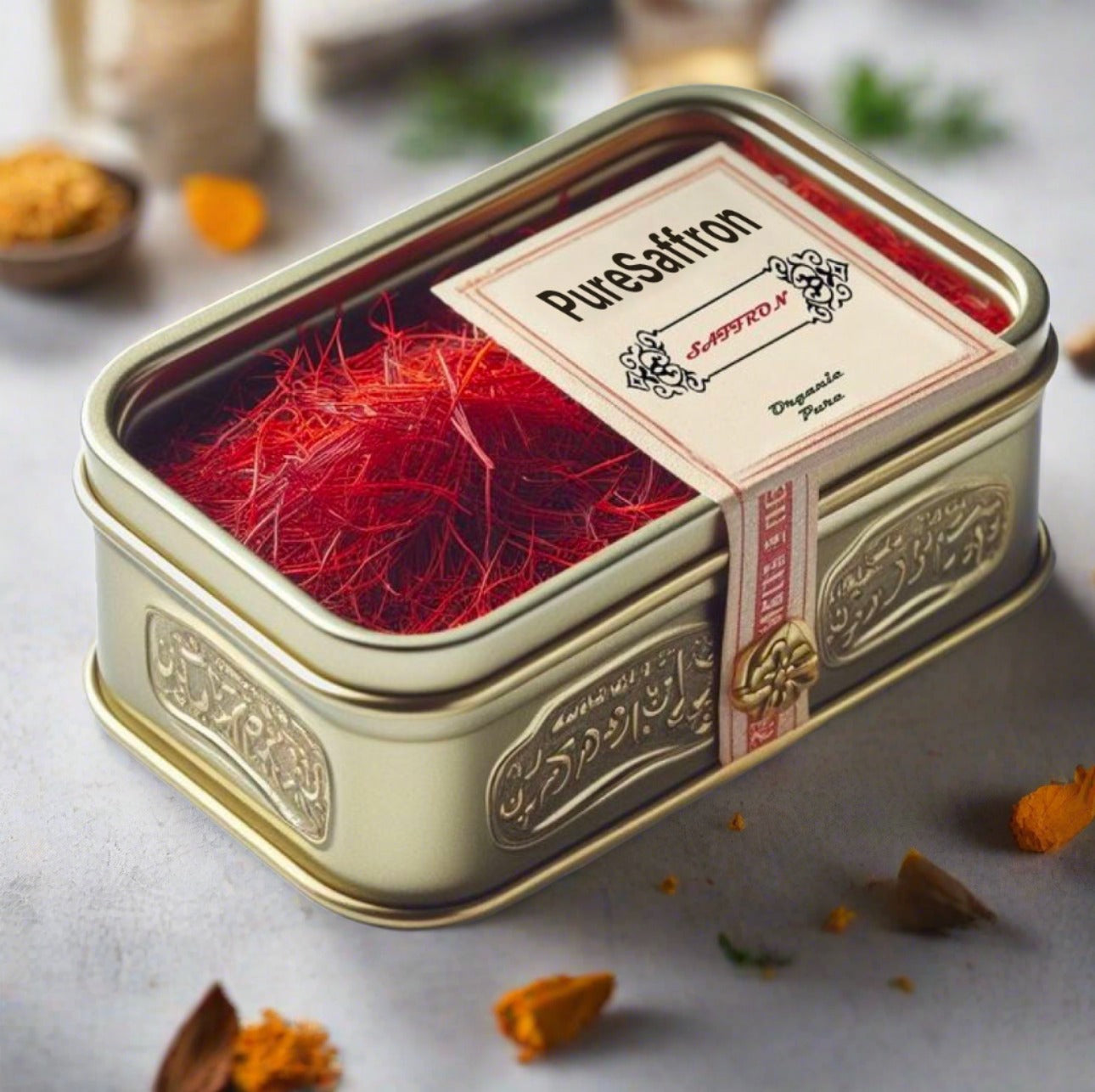
Moisture, water activity, and why some saffron goes 'flat' fast
Ara OhanianShare
Saffron water activity — the measure of available moisture inside the dried stigma — determines how fast your saffron loses color, aroma, and flavor in storage. ISO 3632 sets maximum moisture at 12% for filaments and 10% for powder, but those ceilings are generous. Research published in the Journal of Agricultural and Food Chemistry shows that crocin degradation follows first-order kinetics strongly dependent on both temperature and water activity: raise either one, and pigment loss accelerates measurably. The practical target for long shelf life is a water activity (aw) between 0.32 and 0.53 — low enough to prevent microbial growth and enzymatic browning, high enough to avoid brittleness that destroys thread integrity during handling.
Water Activity vs Moisture Content: Why the Distinction Matters
Moisture content tells you how much water is in a saffron sample by weight — expressed as a percentage. Water activity tells you how much of that water is available for chemical reactions and microbial growth — expressed on a scale from 0 (bone dry) to 1.0 (pure water). Two saffron samples can have identical moisture percentages but different water activities depending on how tightly water molecules are bound to the plant matrix.
This distinction matters because degradation reactions respond to water activity, not moisture content. A saffron thread at 10% moisture stored in a sealed tin may have an aw of 0.43 — stable and safe. The same thread at 10% moisture stored in a humid kitchen may equilibrate to aw 0.65 within days as it absorbs ambient moisture — and at that level, enzymatic browning and crocin oxidation accelerate significantly.
Think of moisture content as how much fuel is present. Water activity is how much of that fuel is available to burn.
What ISO 3632 Actually Requires
The ISO 3632 standard specifies maximum moisture and volatile matter content for saffron to qualify as a graded spice. The limits are straightforward: 12% maximum for whole filaments (Categories I, II, and III) and 10% maximum for powdered saffron. Samples exceeding these thresholds fail classification regardless of their crocin, picrocrocin, or safranal scores.
What the standard does not specify is a water activity target. This is a significant gap. A saffron sample at 11.5% moisture technically passes ISO 3632 but may have a water activity high enough to cause measurable quality loss within weeks under warm storage conditions. The standard was designed primarily for trade grading at the point of sale, not for predicting shelf stability over months or years.
For buyers evaluating a Certificate of Analysis, moisture content is typically listed. Water activity rarely is. If you are purchasing saffron for long-term inventory — whether as a retailer, food manufacturer, or serious home cook buying in bulk — requesting an aw measurement from the supplier provides a far more useful indicator of storage stability than moisture percentage alone.
The Three Zones of Water Activity for Saffron
Research by Tsimidou and Biliaderis at Aristotle University of Thessaloniki mapped saffron quality degradation across a range of water activities and temperatures. Their findings, combined with work by Bolandi and Ghoddusi on shelf-life determination, define three practical zones for saffron storage.
Zone 1: aw below 0.33 — Dry and stable, but fragile
At very low water activity, saffron is in a glassy state where molecular mobility is restricted. Crocin degradation slows dramatically because chemical reactions require some water to proceed. This zone provides maximum color preservation. The tradeoff is physical fragility: threads become extremely brittle. Handling, packaging, and portioning at this moisture level creates dust and broken fragments, reducing visual grade without changing chemical quality. Freeze-dried saffron often falls in this range.
Zone 2: aw 0.33–0.53 — The stability sweet spot
This is the optimal storage zone for commercial saffron. Threads retain enough flexibility for handling. Crocin degradation remains slow at ambient temperatures. Microbial growth is inhibited — bacteria require aw above 0.85, most molds above 0.70, and xerophilic molds above 0.60. Research found that aw around 0.43–0.53 actually favors the development of safranal (the compound responsible for saffron's distinctive aroma), meaning saffron stored in this range may develop richer aroma over time while maintaining color stability.
Zone 3: aw above 0.53 — Accelerating degradation
Above 0.53, the rate of quality loss increases significantly. At aw 0.75, studies showed that coloring strength (crocin) decreased substantially over 12 weeks at 20°C — and the loss was far worse at 30°C or 40°C. Bitterness (picrocrocin) also declined. The saffron may still look acceptable but will underperform in cooking: less color release, muted flavor, and reduced aromatic impact. At aw above 0.70, mold becomes a real risk, particularly Aspergillus species that can produce mycotoxins.
How Temperature and Water Activity Interact
The critical finding from kinetic studies is that temperature and water activity are not independent — they multiply each other's effects. Saffron stored at 40°C and aw 0.75 loses color at roughly 8–10 times the rate of saffron stored at 20°C and aw 0.32. This explains why the same saffron performs differently depending on where you keep it.
A shelf next to a stove in a humid kitchen — common in many homes — can expose saffron to temperatures above 30°C and ambient humidity that pushes aw above 0.60. Under these conditions, a saffron that would maintain Category I spectrophotometry values for two years in proper storage may drop below Category II thresholds within six months.
The practical rule: every 10°C increase in storage temperature roughly doubles the rate of crocin degradation, and every 0.10 increase in water activity at the same temperature accelerates it further. Cool and dry is not just a recommendation — it is the single most important factor in saffron longevity.
The Glass Transition Threshold
Research using differential scanning calorimetry (DSC) revealed that saffron carotenoid extracts have a glass transition temperature (Tg) that is extremely sensitive to moisture content. Below Tg, the saffron matrix is in a glassy state with severely limited molecular mobility — reactions that degrade crocin essentially stall. Above Tg, the matrix becomes rubbery, molecular diffusion increases, and degradation proceeds.
Water acts as a plasticizer: adding moisture lowers Tg. This means that saffron stored in dry conditions at room temperature may be below its glass transition — stable. The same saffron absorbing humidity in an open container may rise above Tg and begin degrading, even though the temperature hasn't changed. This is why airtight containers matter more than temperature control for most home storage scenarios.
Why Some Saffron Goes "Flat" Fast
The "flat" saffron phenomenon — threads that look correct but produce weak color, muted aroma, and thin flavor — almost always traces back to moisture mismanagement at one of four points in the supply chain.
Poor initial drying: Saffron harvested in humid conditions and dried too slowly (shade drying over several days) may never reach optimally low moisture. Threads can reach aw 0.55–0.65 and begin degrading immediately. Research on Kashmiri saffron found that freeze drying produced the best retention of crocin, safranal, and picrocrocin compared to cabinet drying and traditional methods, precisely because it achieved lower final moisture more quickly.
Rehydration during processing: Saffron properly dried to aw 0.35 but then hand-sorted in a humid facility can absorb enough moisture during several hours of exposure to rise above 0.50. This is particularly common in regions where processing facilities lack climate control.
Packaging failure: Non-barrier packaging — paper bags, thin cellophane, loosely sealed tins — allows moisture vapor transmission. Saffron will equilibrate with ambient humidity over weeks. In a climate with 60% relative humidity, properly dried saffron in poor packaging will stabilize around aw 0.55–0.60, entering the accelerated degradation zone.
Consumer storage: Even well-packaged saffron degrades if the consumer stores it in a humid, warm environment and repeatedly opens the container, exposing threads to ambient air. Each opening introduces moisture that the saffron absorbs but does not release when resealed.
The Water Activity Storage Decision Framework
| Storage Scenario | Target aw | Expected Shelf Life | Key Risk | Packaging Requirement |
|---|---|---|---|---|
| Long-term warehouse (commercial) | 0.32–0.40 | 3+ years | Thread brittleness during handling | Vacuum-sealed, opaque, moisture barrier |
| Retail shelf (ambient temperature) | 0.40–0.50 | 2–3 years | Humidity ingress if seal broken | Sealed tin or glass with gasket, opaque |
| Home pantry (cool, dry shelf) | 0.40–0.53 | 1.5–2 years after opening | Repeated opening introduces moisture | Small airtight container, dark location |
| Warm kitchen near stove | 0.50–0.65 (uncontrolled) | 3–6 months effective quality | Heat + humidity = rapid crocin loss | Move to cooler location immediately |
| Humid climate, no AC | 0.55–0.70 (uncontrolled) | 2–4 months effective quality | Mold risk above 0.70 | Refrigerator in sealed container with desiccant |
Measuring Water Activity at Home
Laboratory-grade water activity meters (Rotronic, AquaLab) cost $2,000–$5,000 and provide readings accurate to ±0.003 aw. These are practical for saffron importers and large retailers but overkill for home use.
For home assessment, proxy indicators work well enough. Properly dried saffron at aw below 0.50 feels dry and slightly flexible — threads bend before breaking. Threads snap instantly suggest very low aw (below 0.30) — the saffron is dry, stable, but handle gently. Threads that feel leathery, bend easily without breaking, or feel slightly tacky suggest elevated aw (above 0.55) — use soon or transfer to airtight storage with a food-grade desiccant packet.
If saffron develops any musty or off-odor — distinct from safranal's honey-hay character — moisture has likely exceeded safe levels and mold growth may have begun. Discard the affected threads.
Practical Storage Protocol
Based on the research findings, here is a storage protocol calibrated for maximum quality retention:
Container: Opaque, airtight glass or metal. Avoid plastic containers that allow slow moisture vapor transmission. Vacuum-sealed foil pouches provide the best barrier for long-term storage.
Location: Cool (below 20°C / 68°F), dark, and away from humidity sources (sinks, dishwashers, stove steam). A dedicated spice cabinet or pantry shelf away from cooking heat is ideal. Refrigerator storage works but requires strict condensation prevention — let the sealed container reach room temperature before opening.
Portioning: If you buy saffron in quantities larger than you'll use in a month, divide it into small portions in separate sealed containers. This limits the frequency of air exposure for the main supply. Use the smallest container that fits each portion — less air space means less moisture exchange.
Desiccant: A food-grade silica gel packet (1–2 grams) inside the container provides an additional moisture buffer. Replace it every 6 months or when the indicator beads change color.
Frequently Asked Questions
What is the ideal moisture content for saffron storage?
ISO 3632 allows up to 12% moisture for filaments and 10% for powder, but optimal storage stability requires water activity (aw) between 0.32 and 0.53 — which corresponds to roughly 5–10% moisture content depending on the saffron's composition and structure. Lower water activity preserves color longer, while the 0.43–0.53 range favors aroma development. Request water activity data from suppliers rather than relying solely on moisture percentage.
How long does saffron last if stored properly?
Saffron stored at aw below 0.50 in airtight, opaque containers at temperatures below 20°C retains peak quality for 2–3 years. After that, crocin (color) begins declining noticeably even under ideal conditions. Safranal (aroma) may actually peak 6–12 months into storage before gradually declining. Ground saffron degrades 3–5 times faster than whole threads due to increased surface area exposure to oxygen and moisture.
Can I store saffron in the refrigerator?
Refrigerator storage (4°C) slows degradation kinetics significantly — roughly halving the rate of crocin loss compared to room temperature. The risk is condensation: removing a cold container and opening it in a warm kitchen causes water vapor to condense directly onto the threads, spiking water activity locally. Always let a refrigerated saffron container reach room temperature (30–60 minutes) before opening, and reseal immediately after portioning.
Why does my saffron lose color even in a sealed container?
Three likely causes. First, if the container was not airtight, slow moisture ingress raised aw above the stability threshold. Second, the container may allow light transmission — even indirect light degrades crocin through photochemical oxidation. Third, if the container sits in a warm location (above 25°C), heat alone accelerates degradation even at moderate water activity. Move to a cooler, darker location and check the seal quality.
Does vacuum sealing saffron help?
Vacuum sealing provides two benefits: it removes oxygen (reducing oxidative degradation of crocin) and creates a moisture barrier that prevents water activity from changing. For long-term storage of bulk purchases, vacuum-sealed foil-laminate pouches are the best commercially available option. The main limitation is that vacuum pressure can crush delicate threads — use gentle vacuum settings or a displacement method rather than full vacuum.
What is the difference between saffron going stale and saffron going bad?
Stale saffron (aw 0.50–0.65, warm storage) loses potency gradually — color weakens, aroma flattens, and flavor becomes thin. It is safe to consume but underperforms in recipes, requiring more threads for the same result. Bad saffron (aw above 0.70, visible mold, musty odor) has developed microbial contamination and should be discarded. The transition from stale to bad is a function of both water activity and time — saffron that absorbs enough moisture to reach aw 0.70+ in a warm environment can develop mold within weeks.
Water activity is the single most predictive measurement for saffron shelf life — more predictive than moisture content, more actionable than spectrophotometry values, and more relevant to your daily experience than ISO grade. Control it, and your saffron stays vibrant. Ignore it, and even Category I saffron goes flat. PureSaffron ships in sealed, opaque packaging designed to maintain optimal water activity from warehouse to your pantry — every batch includes spectrophotometry data so you can verify quality on arrival.