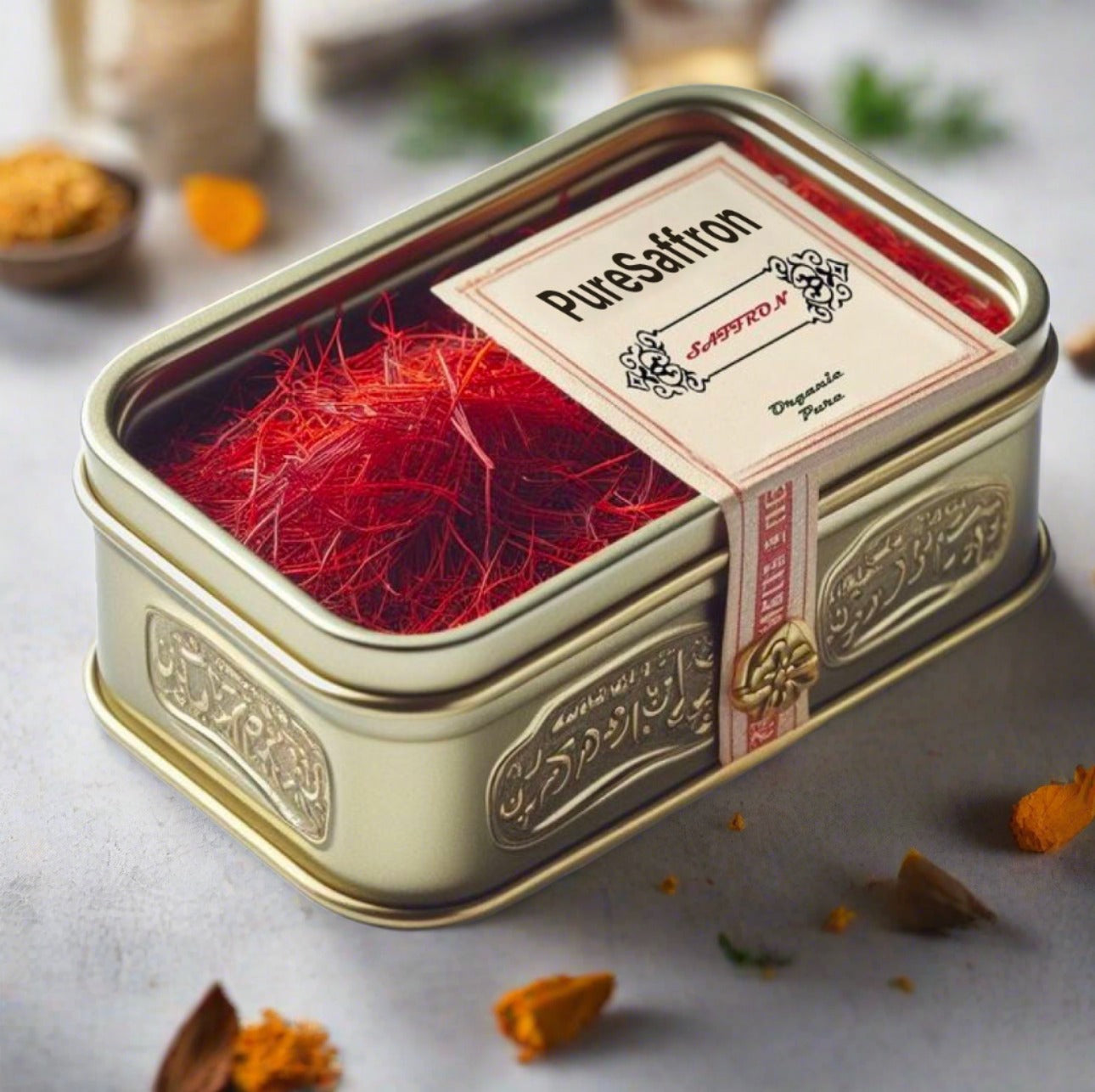
The Saffron Gift Guide: How to Give Saffron Well at Every Budget
Ara OhanianShare
Saffron is one of the great underused gifts. It's lightweight, ships easily, lasts a year or more when stored properly, costs less than the equivalent bottle of mid-range wine, and signals genuine thoughtfulness in a way that's hard to fake. The recipient gets something they almost certainly wouldn't buy for themselves, that lasts through dozens of meals, and that elevates everything from a Tuesday-night rice to a holiday paella.
The problem with giving saffron is that most gift-givers don't know what makes a good saffron gift versus a mediocre one. Buying random grocery-store saffron and putting it in a ribbon-wrapped jar is a worse gift than buying a decent bottle of olive oil. Buying genuine premium saffron, on the other hand, lands almost universally well.
This guide is for anyone trying to give saffron well — for weddings, birthdays, housewarmings, holidays, hostess gifts, or corporate gifting. We'll cover what to look for, what to avoid, how to pair it, and what the price points actually mean.
Why saffron makes a genuinely good gift
A few honest reasons saffron outperforms most gift categories:
It's luxurious without being conspicuous. Saffron costs real money but doesn't shout. A 2-gram jar of Super Negin is more expensive than most bottles of wine, but it doesn't read as showy the way an expensive bottle does. The recipient feels valued without feeling overwhelmed.
It's something most people won't buy for themselves. Saffron sits in a strange pricing zone where it feels like a splurge for daily cooking, even though the per-serving cost is modest. As a gift, you remove that hesitation — the recipient gets to use something they'd otherwise skip past at the store.
It lasts. Properly stored saffron is good for 12-18 months. The recipient isn't on a clock to consume it (like with a bottle of wine, fresh flowers, or chocolate). They can dip into it occasionally for special meals over a long period.
It works for almost every dietary restriction. Vegan, kosher, halal, gluten-free, low-sugar, low-FODMAP — saffron threads themselves clear all of these. You don't need to know the recipient's diet in detail.
It travels well. Lightweight, non-fragile, no temperature requirements, no liquid restrictions for air travel. You can bring saffron as a hostess gift across borders without complications.
What separates a good saffron gift from a bad one
The mistakes people make when giving saffron are predictable. Avoiding them is mostly a matter of buying from a serious source.
Avoid grocery-store saffron in tiny plastic boxes. The 0.5-gram jars sold for $10-15 at chain supermarkets are almost universally Category II or III, often from unverified origin, and frequently old stock. They function as saffron in the technical sense but deliver none of the experience. Giving these as a gift is like giving someone box wine in a fancy bag.
Avoid bulk saffron in plain packaging. If you're buying 5+ grams in a Ziploc bag for resale-style pricing, the recipient won't experience this as a gift. The packaging is part of what makes saffron giftable.
Avoid "saffron" gift sets where saffron is a small afterthought. Saffron paired with cheap supermarket spices, generic mortars and pestles, or filler products dilutes the impression. If you want a gift set, build it intentionally.
Avoid old saffron. Ask for the harvest date before buying. Saffron from this autumn's harvest is significantly better than saffron from two seasons ago, even at the same grade. A gift of fresh saffron is meaningfully more valuable than a gift of aged saffron at the same price.
Do include documentation. A lot number, a COA, or even just a printed card with origin and harvest date elevates the gift from "some saffron" to "a specific, verifiable thing." See our COA guide for what good documentation looks like.
Gift tiers by budget
Under $20: thoughtful hostess gift
A 1-gram jar of Category I Persian Sargol or Negin from a reputable source covers this tier. Look for:
- Glass jar or sealed tin (not a paper envelope or plastic bag)
- Recent harvest date visible on the packaging
- Origin specified ("Persian Khorasan" or "Spanish La Mancha PDO")
- Grade specified (Sargol, Negin, or Super Negin)
This is the ideal hostess gift for someone hosting dinner, a small birthday present, or a holiday teacher gift. It feels intentional without being extravagant.
$30-60: real gift
At this tier, you can get a 2-gram jar of Super Negin from a verified source, or a 1-gram jar paired with a complementary item:
- Saffron + a small bottle of high-quality olive oil
- Saffron + a handwritten recipe card for a specific dish
- Saffron + a small mortar and pestle for blooming
- Saffron + a milligram scale (for the serious home cook)
This is the tier for closer friends, established colleagues, important hostess gifts, or birthdays where you want to make an impression.
$80-150: significant gift
3-5 grams of premium Super Negin or PDO La Mancha, packaged in a presentation box, paired with a thoughtful supporting item:
- Saffron + a recipe book focused on Persian or Mediterranean cooking
- Saffron + a quality pestle and mortar in stone or brass
- Saffron + a small tin of high-grade smoked paprika and a recipe for paella
- Saffron in a custom presentation case with a handwritten note
This works for weddings, milestone birthdays, anniversaries, executive corporate gifts, or important client thank-yous.
$200+: serious occasion
5-10 grams of the highest available grade, ideally with custom presentation, a specific provenance story, and a documented harvest date and lot number. At this tier, the buyer should expect:
- A full COA, not just a claim
- Producer or co-op name and traceability information
- Presentation packaging built for the occasion (wood box, lined interior, ribbon)
- A printed card or booklet with origin story and recommended uses
This tier is for wedding gifts, retirement gifts, executive-level corporate gifting, or occasions where the gift itself is part of the meaning.
Saffron pairing ideas
When saffron is part of a larger gift, pairing it well multiplies the impact. A few pairings that work consistently:
Saffron + bomba rice + smoked paprika. The paella starter kit. Add a printed recipe card and you've given someone an entire dinner party.
Saffron + basmati rice + cardamom + rose water. The Persian cooking starter kit. Pair with our tahdig recipe for a complete experience.
Saffron + good honey + walnuts. A Middle Eastern breakfast or dessert kit. The honey takes saffron infusion beautifully.
Saffron + green cardamom + pistachios + dried rose petals. The kheer or sholeh zard dessert kit — everything needed for Persian or Indian saffron rice pudding.
Saffron + a quality milligram scale. A practical gift for serious cooks who want to dose saffron precisely. See our dosing guide for why this matters.
Saffron + a recipe book. Najmieh Batmanglij's Food of Life for Persian, Madhur Jaffrey's classics for Indian, Claudia Roden for Middle Eastern — any of these alongside a 2-gram jar of saffron is a complete cooking gift.
Who appreciates saffron as a gift
Some recipients will love a saffron gift more than others. The categories where saffron consistently lands well:
Serious home cooks. People who enjoy cooking as a hobby almost always appreciate high-quality ingredients they don't usually buy for themselves. Saffron sits at the top of this category.
People with cultural ties to saffron-using cuisines. Anyone with Persian, Indian, Spanish, Italian, Moroccan, Greek, or broader Middle Eastern background will recognize quality saffron immediately and appreciate the choice.
Dinner-party hosts. People who frequently host will use saffron in showpiece dishes for guests. They benefit from having premium saffron on hand.
People who don't drink alcohol. For wedding gifts, hostess gifts, or holidays where wine is the default, saffron is an excellent non-alcoholic alternative that still reads as a luxury food gift.
Health-conscious recipients. Saffron has well-documented mood and antioxidant benefits (see our depression and anxiety evidence reviews), which makes it a wellness-adjacent gift without feeling like a supplement.
Who probably won't appreciate it
Saffron isn't a universal gift. Recipients to avoid:
- People who don't cook. If the recipient eats mostly takeout or pre-made food, saffron will sit in their cabinet unused. Pick something else.
- Children or teenagers. Not the right gift demographic.
- Anyone with a saffron allergy or severe spice sensitivity. Rare, but worth confirming for serious gifts.
- People who already cook with premium saffron regularly. They probably have a preferred source already; giving them yours can feel competitive rather than thoughtful.
Holiday and occasion-specific notes
Nowruz (Persian New Year, March 20-21): Saffron is culturally significant during Nowruz. A premium jar with a handwritten Nowruz greeting is among the most appropriate gifts for Persian friends or colleagues.
Christmas / December holidays: Saffron works beautifully as a winter gift — it pairs with cold-weather cooking (paella, risotto, mulled saffron drinks) and feels seasonal in a way that lighter herbs don't.
Weddings: Saffron is traditional in many wedding cuisines (Persian, Indian, Spanish). A presentation-grade gift package works well for the couple, especially if they have cultural connections to saffron.
Diwali: Saffron is significant in Indian sweets and ceremonial cooking. A 2-3 gram jar of Mongra or Persian Super Negin is appropriate for Diwali gifting.
Mother's Day / Father's Day: Saffron paired with a recipe specifically associated with the recipient (their grandmother's biryani, their mother's paella) elevates the gift from "food" to "memory."
Corporate gifting: Saffron works particularly well for corporate gifts because it sidesteps alcohol, religious, and dietary restrictions while still reading as premium. Branded presentation packaging is straightforward to arrange in larger orders.
Practical packaging notes
If you're presenting saffron yourself rather than buying it pre-packaged:
- Use glass jars with airtight lids, not plastic
- Use opaque or amber glass when possible (saffron oxidizes faster in clear glass with light exposure — see our storage guide)
- Include a small label with origin, grade, and harvest date
- Avoid ribbon or paper directly touching the saffron — dyes can transfer
- Ship in padded packaging — saffron threads are surprisingly fragile and can powder during transit
The bottom line
Saffron is one of the few gifts where spending $30-50 actually buys something genuinely special, and where spending $100-200 produces a gift the recipient will remember for years. The keys are buying real saffron (verified origin, recent harvest, documented chemistry), pairing it thoughtfully, and presenting it with the care the ingredient deserves.
Skip the grocery store. Skip the gift baskets where saffron is a token afterthought. Buy a small quantity of the real thing from a serious source, package it well, and give it with a recipe you know the recipient will use. That's the formula.