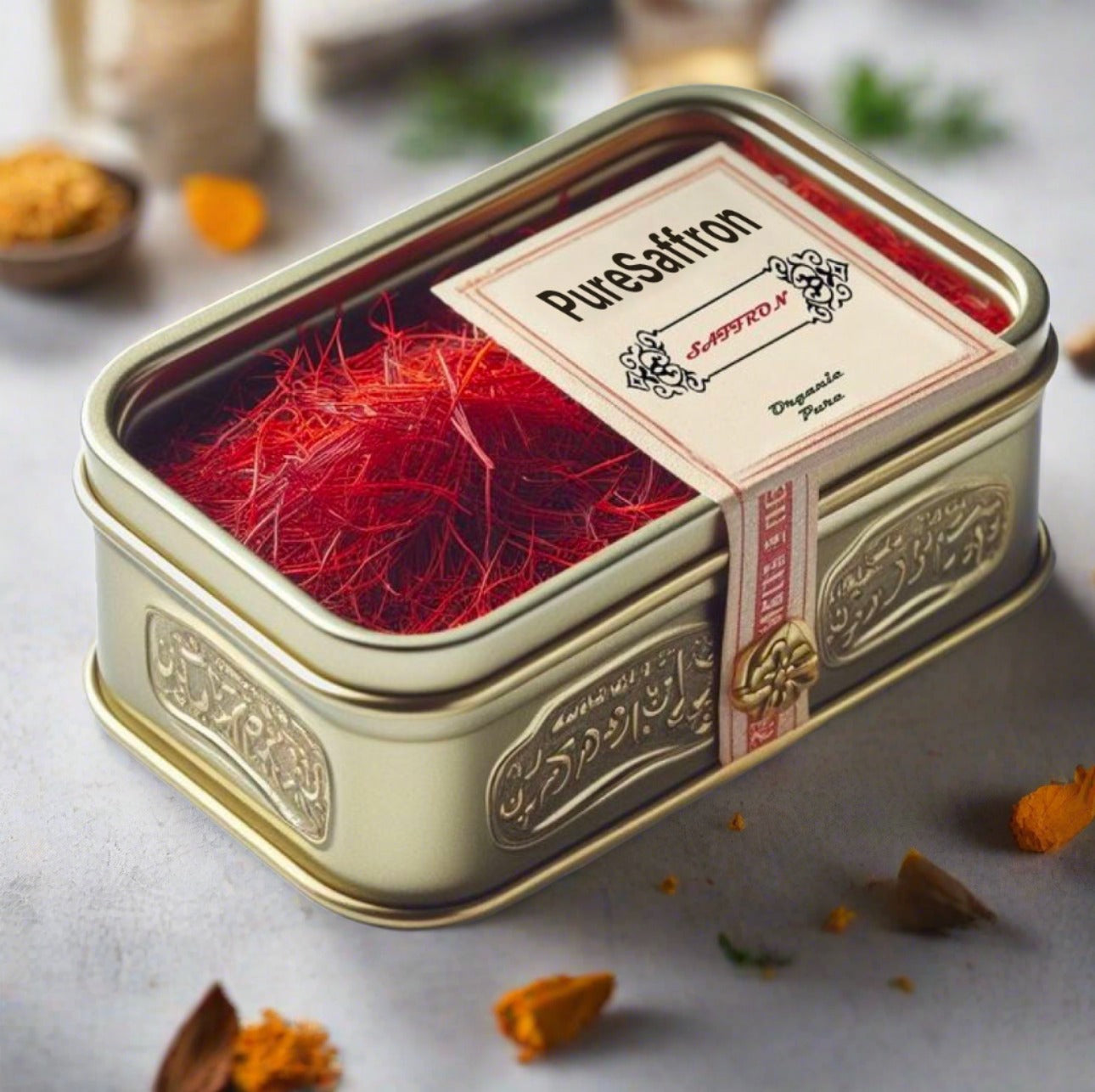
Standardized Extracts vs Culinary Threads: How 'Percent Crocin' Works
Ara OhanianShare
What Does 'Standardized Saffron Extract' Actually Mean?
If you've compared saffron supplements online, you've seen labels claiming "10% crocin," "3% safranal," or even "88.3% crocin." Meanwhile, culinary saffron threads list no percentages at all — just a weight and possibly an ISO 3632 category. These two worlds use different measurement systems, different production methods, and different quality benchmarks, which makes comparing them genuinely confusing even for informed buyers.
This guide explains how standardized saffron extracts are made, what "percent crocin" actually measures, how that compares to culinary thread grading under ISO 3632, and when each form makes practical sense.
Culinary Threads vs. Standardized Extracts: Two Different Products
Culinary saffron threads are the dried stigmas of Crocus sativus L. — minimally processed, whole plant material. When you buy ISO 3632 Category I saffron threads, you're getting the complete stigma with all its natural compounds intact: crocin (color), safranal (aroma), picrocrocin (bitterness), plus fiber, proteins, carbohydrates, and minor carotenoids. The crocin content of high-quality raw threads is typically 4–6% by weight.
A standardized saffron extract is a concentrated preparation where the active compounds have been isolated, measured, and adjusted to consistent levels. The manufacturer extracts the target compounds from raw stigmas using a solvent (water, ethanol, or methanol), concentrates the solution, then dries it — typically by spray drying — into a powder with a guaranteed minimum percentage of specific compounds.
The key difference: threads preserve the full spectrum of stigma compounds in their natural ratios. Extracts concentrate specific compounds while losing the cellular matrix, fiber, and some minor phytochemicals. Whether that tradeoff matters depends entirely on what you're using saffron for.
How Standardized Extracts Are Produced
Commercial saffron extract production follows a general sequence, though specifics vary by manufacturer:
Step 1 — Raw material selection. Most reputable extract manufacturers start with ISO 3632 Category I threads as their input material, since higher crocin content in the raw material means more efficient extraction.
Step 2 — Extraction. The stigmas are macerated in a solvent — aqueous (water-based) extraction is most common for dietary supplements due to consumer preference, though methanol extraction is standard in laboratory settings and produces higher yields. A typical laboratory protocol uses 200 mg of saffron powder in 10 mL of methanol with continuous agitation, followed by centrifugation to separate the liquid extract from the solid residue.
Step 3 — Purification. The crude extract is further processed using chromatographic methods (often HPLC — high-performance liquid chromatography) to isolate and concentrate the target compounds. This step separates crocin, safranal, and picrocrocin from other extracted material.
Step 4 — Concentration and drying. The purified liquid is concentrated by evaporating the solvent, then spray-dried into a fine powder. Spray drying atomizes the liquid extract into hot air, producing stable powder particles with consistent moisture content.
Step 5 — Standardization. The dried extract is analyzed using UV-Vis spectrophotometry at specific wavelengths — 440 nm for crocin, 330 nm for safranal, 257 nm for picrocrocin — then blended or adjusted to achieve the target standardization level (e.g., 3% crocin, 10% crocin).
Some manufacturers use advanced delivery systems to improve absorption. Liposomal formulations encapsulate crocin in lipid particles (MCT oil or phospholipids), which research suggests can improve bioavailability by 30–50% compared to standard powder extracts. Soft-gel capsules dissolving crocin in an oil-based medium follow a similar principle.
Understanding 'Percent Crocin' on Supplement Labels
When a supplement label states "standardized to 10% crocin," it means 10 grams of crocin per 100 grams of extract powder, measured by weight. A 30 mg capsule of 10% crocin extract therefore delivers approximately 3 mg of crocin per capsule.
Common standardization levels on the market include:
| Standardization Level | Crocin per 30 mg Capsule | Typical Use Case | Approximate Cost per Capsule |
|---|---|---|---|
| 2–3% crocin | 0.6–0.9 mg | General wellness, low-dose supplementation | $0.10–$0.25 |
| 3% crocin + 2% safranal | 0.9 mg crocin + 0.6 mg safranal | Dual-standardized, popular mid-range | $0.15–$0.35 |
| 5% crocin | 1.5 mg | Higher-potency general use | $0.20–$0.40 |
| 10% crocin + 2% safranal | 3 mg crocin + 0.6 mg safranal | Premium, concentrated extract | $0.30–$0.50 |
| Patented formulations (e.g., affron®) | Varies (15 mg extract per dose typical) | Clinical trial-matched dosing | $0.40–$0.80 |
Contrast this with raw saffron threads: ISO 3632 Category I saffron contains roughly 4–6% crocin by weight naturally — meaning a 100 mg pinch of premium threads delivers 4–6 mg of crocin. The threads don't list this percentage because they're graded differently.
ISO 3632 Grading vs. Supplement Standardization: How They Relate
ISO 3632 and supplement standardization both measure crocin, safranal, and picrocrocin, but they use fundamentally different measurement units and serve different purposes.
ISO 3632 uses spectrophotometric absorbance values measured on a 1% aqueous solution of dried saffron. Category I requires crocin absorbance (E1% at 440 nm) ≥ 190, picrocrocin (E1% at 257 nm) ≥ 70, and safranal (E1% at 330 nm) between 20 and 50. These are optical density readings, not weight percentages.
Supplement standardization uses weight-by-weight percentages. "10% crocin" means 10 g of crocin per 100 g of extract, determined by chromatographic analysis (typically HPLC).
The rough conversion: ISO 3632 Category I saffron (crocin absorbance ≥ 190) corresponds to approximately 4–5% crocin by weight in the raw threads. So a 10% standardized extract is roughly 2–2.5× more concentrated than premium raw saffron for crocin specifically — but it lacks the full compound spectrum of whole threads.
An important distinction: ISO 3632 grading applies only to raw saffron threads and powder — not to concentrated extracts. A supplement label claiming "ISO 3632 Category I" is referencing its source material, not the extract itself. The extract has been transformed beyond what ISO 3632 was designed to measure.
Marketing Claims That Should Raise Questions
The saffron supplement market contains claims that range from optimistic to scientifically implausible. Here's how to evaluate what you see:
"88.3% crocin" or similar very high percentages. Raw saffron contains 4–6% crocin. Even concentrated extracts rarely exceed 15% crocin in a commercially viable product. Claims above 15% likely refer to the purity of an isolated crocin standard compound — essentially a laboratory reagent, not a dietary supplement. A consumer product with 88% crocin would be almost pure crocin chemical, not a saffron extract.
"5000× concentration" without context. This number is meaningless without knowing the starting material and the target compound. A 5000:1 extraction ratio would imply you need 5,000 grams of saffron to produce 1 gram of extract — which is both extremely expensive and unnecessary for achieving useful crocin levels.
"ISO 3632 Category I" on an extract label. As discussed, ISO 3632 applies to raw threads. This claim on an extract means the starting material was Category I, which is a positive sign but doesn't tell you the extract's actual crocin percentage.
"Proprietary blend" hiding actual percentages. If a manufacturer won't disclose the standardization level of their extract, you have no way to calculate your actual crocin intake per dose. Legitimate products list specific percentages.
Claims of "FDA approved." Dietary supplements in the United States are not FDA-approved. Saffron has GRAS (Generally Recognized As Safe) status for culinary use, and supplements are regulated under DSHEA (Dietary Supplement Health and Education Act of 1994), which places the burden of safety on the manufacturer. The FDA does not pre-approve supplement formulations.
Cost Per Milligram of Crocin: Threads vs. Extracts
When you normalize the comparison to cost per milligram of crocin delivered, the economics shift depending on the use case:
| Saffron Form | Typical Price | Crocin Content | Cost per mg Crocin |
|---|---|---|---|
| ISO 3632 Cat. I threads | $10–20/gram | 40–60 mg/gram (4–6%) | $0.17–$0.50 |
| Budget 3% extract (capsules) | $0.10–$0.20/capsule (30 mg) | 0.9 mg/capsule | $0.11–$0.22 |
| Premium 10% extract (capsules) | $0.30–$0.50/capsule (30 mg) | 3 mg/capsule | $0.10–$0.17 |
| Liposomal/enhanced formulation | $0.50–$1.00/capsule | 3 mg/capsule + enhanced absorption | $0.17–$0.33 (effective dose may be lower) |
For culinary use, this comparison is irrelevant — you use threads for flavor, aroma, and color, not for crocin delivery. But for anyone evaluating saffron supplements for wellness purposes, the cost-per-milligram calculation reveals that premium 10% extracts actually deliver crocin more cost-effectively than raw threads, with the added benefit of consistent dosing.
When Culinary Threads Are Enough
Culinary saffron threads provide adequate compound exposure for several use cases:
Cooking and baking. A standard culinary dose — a pinch of 15–30 threads (roughly 50–100 mg) — delivers 2–6 mg of crocin along with the full aromatic and flavor profile. For culinary purposes, this is the only form that makes sense. Extracts lack the visual beauty, aroma development, and flavor complexity that make saffron a cooking ingredient.
General dietary exposure. Regular culinary use of saffron — 2–3 times per week at standard cooking doses — provides modest but consistent exposure to saffron's bioactive compounds in their natural form, within the food matrix that has been consumed for thousands of years.
Sensory enjoyment. The experience of blooming saffron threads in warm liquid, watching the golden color develop, smelling the honey-hay-leather aroma — these are integral to why people use saffron. No capsule replicates this.
When Standardized Extracts Make More Sense
Extracts become relevant when consistent, measurable dosing of specific compounds matters:
Matching clinical trial protocols. The majority of published clinical trials on saffron's effects on mood, sleep, and appetite used standardized extracts — not raw threads. Key studies used 30 mg of concentrated extract daily (typically 15 mg twice daily), delivering specific crocin doses that would require 500–1,250 mg of raw threads daily to match. That's impractical and expensive with culinary saffron.
Dosing consistency. Thread quality varies between batches, harvests, and suppliers. A pinch of saffron from one jar may contain substantially different crocin levels than a pinch from another. Standardized extracts guarantee a minimum compound level per dose, which matters for anyone tracking their intake systematically.
Practical compliance. Taking one or two capsules daily is more sustainable long-term than preparing a saffron infusion every day. For people interested in sustained, regular saffron compound intake, capsule convenience supports consistency.
That said, supplements carry their own caveats. The extract production process strips away whole-plant compounds whose interactions we don't fully understand. The concept of "food matrix synergy" — where compounds in whole foods work together in ways that isolated compounds may not — is well-established in nutrition science, though not yet specifically quantified for saffron.
How to Read a Saffron Supplement Label
A well-labeled saffron supplement provides enough information to calculate exactly what you're getting. Here's what to verify:
Standardization statement. The label should specify both crocin AND safranal percentages — for example, "Standardized to 10% crocin and 2% safranal." A product listing only one compound may have an incomplete profile.
Extract amount per serving. Look for the total extract weight in milligrams per capsule or tablet. "30 mg per capsule" of a 10% crocin extract means 3 mg of crocin per dose. Without the extract weight, the percentage is meaningless.
Source specification. The label should state "Extract from Crocus sativus L. stigmas" — stigmas only. Extracts from the whole plant (including petals and corm) have different compound profiles and lower crocin content.
Third-party testing. Verification marks from USP, NSF, or ConsumerLab indicate independent testing. These aren't required by law, but they provide an additional layer of quality assurance beyond the manufacturer's own claims.
Bioavailability method. If the product uses liposomal delivery, MCT oil encapsulation, or another absorption-enhancement method, this should be stated. These formulations typically cost more but may deliver effective doses more efficiently.
Green flags on a supplement label
Specific standardization percentages for both crocin and safranal. ISO 3632 Category I raw material sourcing documented. Third-party lab testing with a verifiable lab name. Clinical trial citations referencing specific dosages. Clear manufacturing date and batch number. Full ingredient list including capsule materials and fillers.
Red flags on a supplement label
"Proprietary blend" without disclosed percentages. Crocin claims above 15%. "FDA approved" language (supplements aren't FDA-approved). No batch number or manufacturing date. Generic terms like "premium" or "potent" without numbers. Extremely low pricing relative to the market (suggesting underfilled capsules or low-grade material).
Regulatory Landscape: What the Rules Actually Say
Saffron occupies different regulatory categories depending on form and jurisdiction:
United States. Saffron spice has FDA GRAS status for culinary use. Saffron supplements are classified as dietary supplements under DSHEA (1994), meaning manufacturers are responsible for safety but don't need FDA pre-approval. Labels can use structure-function claims ("supports emotional balance") but not disease claims ("treats depression"). Manufacturers must follow current Good Manufacturing Practices (cGMP) and report adverse events.
European Union. The EU applies stricter rules. Concentrated saffron extracts may require Novel Food authorization if they exceed levels associated with traditional use. Health claims require substantial clinical evidence under EFSA (European Food Safety Authority) review. Saffron is not currently approved for specific health claims in the EU, though traditional herbal medicine registration pathways exist in some member states.
Canada. Health Canada requires a Natural Product Number (NPN) for saffron supplements, which involves demonstrating quality standards and standardization. The Canadian system occupies a middle ground between U.S. permissiveness and EU restrictiveness.
The regulatory environment means that identical saffron extract products may carry very different claims depending on where they're sold. A supplement marketed as "supporting mood balance" in the United States might only be allowed to describe itself as a "traditional herbal preparation" in the EU.
Frequently Asked Questions
Can I get therapeutic-level crocin from cooking with saffron?
It depends on what you consider therapeutic. Clinical trials typically use 30–50 mg of concentrated extract daily, delivering 3–15 mg of crocin depending on standardization. A generous culinary dose (100 mg of threads) provides roughly 4–6 mg of crocin — within the lower range of studied doses. However, culinary use involves heat, which can degrade some compounds, and absorption from food matrix differs from capsule delivery. Regular culinary use provides meaningful compound exposure, but matching exact clinical trial protocols with cooking alone is difficult.
Are higher crocin percentages always better in supplements?
Not necessarily. A 10% extract in a 30 mg capsule delivers 3 mg crocin. A 3% extract in a 100 mg capsule also delivers 3 mg crocin. The total crocin per dose matters more than the concentration percentage. Higher percentages do mean fewer or smaller capsules for the same dose, which can improve compliance. But a lower-percentage extract that includes balanced safranal and picrocrocin may provide a more complete compound profile than a highly concentrated single-compound product.
Should I choose threads or extracts?
Use threads if your primary goal is culinary — flavor, aroma, color, and cooking experience. No extract replicates this. Consider extracts if you want consistent, measured doses of specific saffron compounds for wellness purposes, particularly if you're trying to match clinical trial protocols. Many people use both: threads in the kitchen, a supplement for consistent daily intake. Our lab-tested saffron collection provides ISO 3632 Category I threads with documented compound levels, so you know exactly what's in your culinary saffron.
How do I verify a supplement's crocin claims?
Request a Certificate of Analysis (COA) from the manufacturer — specifically, a batch-level COA from an accredited (ISO 17025) laboratory showing HPLC analysis of crocin and safranal content. Third-party verification marks (USP, NSF, ConsumerLab) add additional credibility. If the manufacturer can't or won't provide documentation, that's your strongest signal to look elsewhere. The same principle applies to reading a saffron COA for culinary threads.
The Bottom Line
Culinary saffron threads and standardized saffron extracts serve different purposes and are measured by different systems. "Percent crocin" on a supplement label tells you the concentration of crocin in the extract powder by weight — it is not comparable to ISO 3632 absorbance values used for grading raw threads. Neither form is inherently superior; the right choice depends on whether you're cooking or supplementing, and what level of dosing consistency you need.
For culinary use, ISO 3632 Category I threads remain the gold standard — full compound spectrum, natural ratios, and the sensory experience that no capsule delivers. For measured, consistent compound intake at clinical trial-relevant doses, standardized extracts provide the practicality and precision that raw threads cannot.
Whatever form you choose, the same principle applies: demand documentation. For threads, that means an ISO 3632 COA with batch traceability. For supplements, that means disclosed standardization percentages, third-party testing, and verifiable lab reports. The sellers worth buying from are the ones who make this information easy to find.