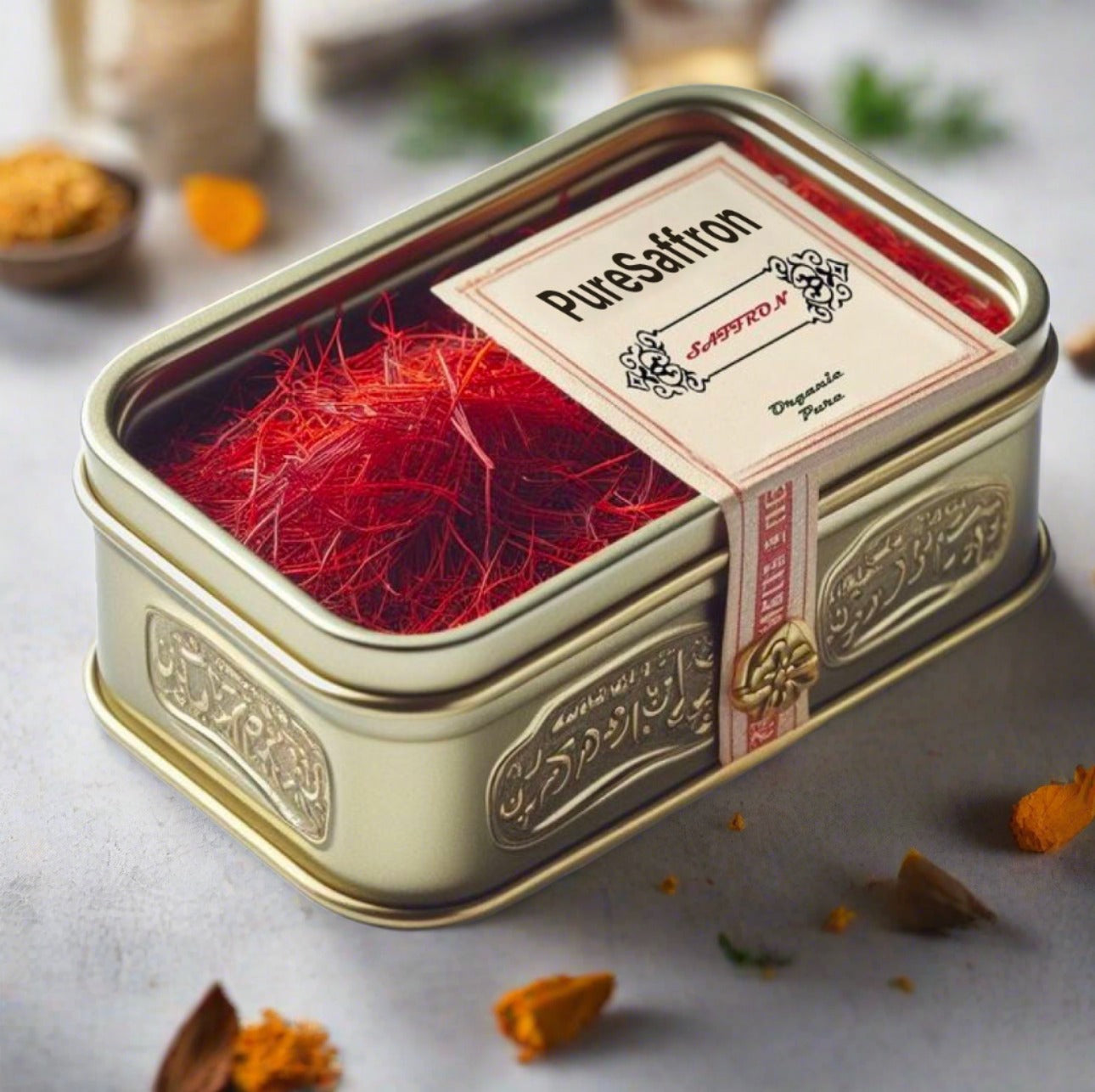
Saffron Quality Scoring Rubric: A Checklist That Beats 'Looks Red'
Ara OhanianShare
Why 'Looks Red' Isn't a Quality Standard
Most saffron buyers evaluate quality the same way: they look at the threads, confirm they're red, and move on. This approach catches roughly nothing. Synthetic dyes can replicate deep crimson color on corn silk, safflower, or coconut fibers. Sugar coatings can make lightweight threads feel substantial. Blended adulterants containing 30–40% genuine saffron will smell and color water convincingly. If your quality assessment begins and ends with visual appearance, you're relying on the one dimension that modern saffron fraud has thoroughly defeated.
What you need instead is a structured scoring system — a checklist that evaluates saffron across multiple independent dimensions, so that a product must pass several unrelated tests rather than just one. This guide provides that framework: a weighted rubric covering laboratory analysis, physical inspection, documentation, packaging, vendor behavior, and price signals, with specific thresholds for each criterion.
The Six Dimensions of Saffron Quality
Reliable quality assessment requires evaluating saffron across six categories, each testing different aspects that are difficult to fake simultaneously:
Dimension 1 — Laboratory analysis (ISO 3632 chemical profile)
Dimension 2 — Physical inspection (thread morphology and sensory characteristics)
Dimension 3 — Documentation (COA, batch traceability, lab accreditation)
Dimension 4 — Packaging quality (oxygen barrier, light protection, seal integrity)
Dimension 5 — Vendor transparency (origin disclosure, communication, willingness to share data)
Dimension 6 — Price consistency (realistic pricing within market ranges)
Any single dimension can be gamed. A forger can produce a fake COA. A legitimate vendor might use poor packaging. A high price doesn't guarantee quality. But a product that scores well across all six dimensions simultaneously is extremely difficult to fake — the cost and complexity of defeating every checkpoint exceeds the profit from fraud.
Dimension 1: Laboratory Analysis Under ISO 3632
ISO 3632 defines saffron quality through spectrophotometric measurement of three compounds at specific wavelengths. These numbers are the most objective, reproducible, and fraud-resistant quality indicators available.
| Parameter | Wavelength | Category I | Category II | Category III | What It Measures |
|---|---|---|---|---|---|
| Crocin (color) | 440 nm | ≥ 190 | ≥ 170 | ≥ 120 | Coloring strength |
| Picrocrocin (taste) | 257 nm | ≥ 70 | ≥ 55 | ≥ 40 | Bitterness / flavor intensity |
| Safranal (aroma) | 330 nm | 20–50 | 20–50 | 20–50 | Aroma potency |
| Moisture | — | ≤ 12% | ≤ 12% | ≤ 12% | Dryness and shelf stability |
| Floral waste | — | ≤ 0.5% | ≤ 0.5% | ≤ 1.0% | Non-stigma plant material |
| Foreign matter | — | ≤ 0.1% | ≤ 0.1% | ≤ 0.1% | Non-saffron contamination |
Scoring guidance: Category I saffron meeting all six parameters scores highest. Category II is acceptable for most culinary and commercial use. Category III indicates lower potency — still genuine saffron, but with noticeably weaker color, flavor, and aroma. Any saffron sold without reference to ISO 3632 testing cannot be evaluated on this dimension at all, which is itself a significant red flag.
The critical detail: these measurements require a UV-Vis spectrophotometer — a laboratory instrument, not something you can replicate at home. This dimension is assessed indirectly, through the documentation a vendor provides. Which leads directly to Dimension 3.
Dimension 2: Physical Inspection and Sensory Evaluation
While physical inspection alone is insufficient (as we established), it remains a valuable supplementary check when combined with other dimensions. Trained sensory panels use standardized evaluation criteria that provide more information than casual observation.
Thread morphology
Trumpet shape. Genuine saffron stigmas are trumpet-shaped — wider at one end (the tip) and narrowing toward the base where they attach to the style. This shape is a botanical characteristic of Crocus sativus stigmas that is difficult to replicate in fake threads. Uniformly cylindrical or flat threads suggest non-saffron material.
Length. Standard stigma length is 2–4 cm. "Super Negin" grade consists of only the upper portion of the stigma, so these threads may be shorter. Threads significantly longer than 4 cm may include attached style (the pale yellow connecting tissue), which is botanically genuine but dilutes the crocin concentration per weight.
Color gradient. Authentic threads show a natural color gradient: deep crimson to dark maroon at the tips, transitioning to slightly lighter red along the body, sometimes with orange or yellow at the base where the style begins. Uniformly bright red threads with no gradient variation are suspicious — natural biological material almost always shows subtle variation.
Flexibility. Fresh, properly stored saffron threads are pliable and resilient. They bend without snapping. Brittle threads that crumble suggest either significant age (2+ years), excessive drying, or artificial fibers. Conversely, threads that feel damp, heavy, or sticky may have been coated with glycerin, sugar water, or oil to increase weight.
Sensory evaluation
Aroma. Genuine saffron has a complex aroma profile often described as honey, hay, and leather — the result of safranal and related volatile compounds. This aroma should be detectable immediately upon opening the container. Weak aroma suggests aged or low-grade saffron. Metallic, chemical, or absent aroma suggests adulteration. Safflower (the most common adulterant) has essentially no aroma.
Taste. When chewed, genuine saffron is distinctly bitter — this bitterness comes from picrocrocin. A sweet taste indicates sugar coating (weight fraud). No bitterness at all suggests non-saffron material or extremely degraded threads.
Color release in water. When placed in warm water, genuine saffron releases a golden-yellow color gradually over 10–15 minutes. The threads themselves remain deep red and structurally intact. Immediate bright red or orange bleeding suggests artificial dyes. Threads that dissolve, disintegrate, or lose structural integrity are not saffron stigmas. Note: this test catches only crude fraud — sophisticated adulterants can mimic the color release pattern. (For a deeper analysis, see our water test myth article.)
Scoring guidance: Physical inspection provides supporting evidence, not definitive proof. A sample that passes all physical checks but lacks laboratory documentation may still be adulterated. A sample that fails physical inspection is almost certainly problematic.
Dimension 3: Documentation
Documentation is the dimension that separates serious suppliers from everyone else. The relevant documents, in order of importance:
Certificate of Analysis (COA). A batch-specific laboratory report testing at minimum the six ISO 3632 parameters: crocin absorbance (440 nm), picrocrocin absorbance (257 nm), safranal absorbance (330 nm), moisture content, floral waste, and foreign matter. The COA should reference ISO 3632-1 and ISO 3632-2 testing frameworks explicitly.
Critical COA verification points: the lab name and address should be stated and verifiable. The lab should hold ISO 17025 accreditation, which is the international standard for testing laboratory competence. The COA should carry a batch number that matches the product packaging. The testing date should be within the last 12 months for current inventory. For guidance on interpreting COA values, see our COA reading guide.
Batch traceability records. Can the vendor trace your specific package back to a harvest date, a farm or growing region, and a processing facility? Batch traceability infrastructure makes adulteration difficult because every lot has a documented chain of custody. It's expensive to implement, which is precisely why it's a strong quality signal — brands investing in traceability have economic incentives to protect, not undermine, their system.
Additional testing. Premium vendors may also provide pesticide residue screening (GC-MS or LC-MS/MS), heavy metal testing (ICP-MS), mycotoxin testing (aflatoxin B1/B2/G1/G2), and microbial safety testing. These go beyond ISO 3632 authenticity testing into food safety territory. Their presence indicates a supplier operating at a higher standard. Their absence doesn't necessarily indicate a problem, but it does represent an unknown.
Scoring guidance: A vendor that provides a verifiable, batch-specific COA from an ISO 17025 lab scores highest. A vendor that claims ISO 3632 compliance but cannot produce a COA scores poorly. A vendor that doesn't reference ISO 3632 at all scores zero on this dimension.
Dimension 4: Packaging Quality
Saffron degrades through three mechanisms — oxidation, light exposure, and moisture absorption — all of which are controlled (or not) by packaging choices. The packaging tells you how much a vendor understands about preserving what they sell.
Container material. Glass or metal are optimal — they provide complete oxygen and moisture barriers. Amber or opaque glass blocks the UV wavelengths (below 400 nm) that degrade crocin and safranal. Clear glass allows UV degradation but is better than plastic. Plastic bags or containers allow oxygen permeation over time, accelerating compound loss. (For detailed oxygen barrier science, see our packaging science article.)
Light protection. Any transparent packaging that exposes saffron to ambient light is a quality-reducing design choice. Our UV degradation article covers the research showing that clear glass placement can degrade crocin by 20–30% within weeks. Amber glass, metal tins, or opaque packaging preserves potency.
Atmosphere control. Nitrogen-flushed packaging (modified atmosphere packaging, or MAP) replaces the oxygen inside the container with inert nitrogen gas, dramatically slowing oxidation. Vacuum-sealed packaging achieves a similar effect. Either approach is a positive quality signal indicating the vendor prioritizes shelf stability. Standard atmospheric packaging with just an airtight seal is adequate for short-term storage but suboptimal for long shelf life.
Seal integrity. Tamper-evident closures, shrink bands, or foil seals demonstrate attention to product integrity. They also create accountability — once opened, the seal visibly indicates the package has been accessed.
Scoring guidance: Amber glass or metal with nitrogen flush and tamper-evident seal represents best-in-class packaging. Opaque plastic with a good seal is acceptable. Clear plastic bags represent the lowest packaging standard and suggest either cost-cutting or indifference to quality preservation.
Dimension 5: Vendor Transparency
How a vendor communicates about their product reveals as much as the product itself. Transparency indicators include:
Willingness to share a COA. This is the single strongest vendor behavior signal. If you request a COA and receive one promptly — with a verifiable lab, matching batch numbers, and recent dates — the vendor is demonstrating confidence in their product. If the request is deflected, delayed, or met with a generic document that doesn't match batch numbers, the vendor either doesn't test their product or doesn't want you to see the results.
Origin specificity. Credible vendors disclose the specific growing region — "Khorasan Province, Iran," "Kozani, Greece," or "Pampore, Kashmir" — rather than just "imported saffron" or "premium quality." Generic origin claims often mask blended or relabeled product from unknown sources.
Harvest date disclosure. Saffron is harvested once per year, typically in October-November. A vendor that provides the harvest year for their current inventory is giving you information about freshness. Saffron retains optimal quality for approximately two years under proper storage. Beyond three years, safranal (aroma) and picrocrocin (flavor) degrade noticeably even in well-stored product.
Contact accessibility. A legitimate vendor provides a verifiable physical address, phone number, and responsive email. The ability to ask questions and receive informed answers — not just automated responses — indicates operational substance behind the brand.
Educational content. Vendors who publish detailed information about saffron grading, storage, and quality testing tend to be more invested in the product category. This isn't proof of quality, but it's positively correlated — a vendor who understands saffron chemistry well enough to explain it to customers usually cares about the product they sell.
Scoring guidance: Score highest for vendors who provide all of the above proactively (before you ask). Score moderately for vendors who provide it upon request. Score lowest for vendors who cannot or will not provide basic documentation and origin information.
Dimension 6: Price Consistency
Saffron pricing operates within knowable ranges based on grade, origin, and market conditions. Prices that fall outside these ranges — in either direction — are informative signals.
| Grade | Description | Realistic Price Range (per gram) |
|---|---|---|
| Super Negin / Premium | All-red stigma tips, highest crocin, ISO 3632 Cat. I | $12–$20+ |
| Sargol / Standard | All-red stigmas, Cat. I or high Cat. II | $8–$12 |
| Pushal / Commercial | Includes some style, Cat. II–III | $5–$10 |
| Below $5/gram | Nearly certain adulteration — production costs alone make genuine saffron at this price economically impossible | |
The production economics are simple: it takes 150,000–200,000 flowers to produce one kilogram of dried saffron threads, all hand-harvested during a 2–3 week annual harvest window. Labor, land, and processing costs create a floor price below which genuine saffron cannot be profitably sold. When you see saffron priced at $2–3 per gram on a marketplace, the math doesn't work for authentic product.
On the high end, prices above $25 per gram should be accompanied by exceptional documentation — ISO 3632 Category I with very high crocin values (250+), single-origin traceability, and perhaps additional certifications. Premium pricing without premium documentation is just marketing.
Scoring guidance: Price within the expected range for the claimed grade scores positively. Price below the floor for claimed grade is a disqualification signal. Price significantly above range requires proportionally stronger documentation to justify.
The PureSaffron Quality Scoring Rubric
Combining all six dimensions into a weighted scoring system produces a practical evaluation tool. The weights reflect how reliably each dimension indicates actual quality:
| Dimension | Weight | Maximum Points | What Earns Full Score |
|---|---|---|---|
| 1. ISO 3632 Lab Analysis | 35% | 35 | Category I across all parameters, verified by COA |
| 2. Physical Inspection | 15% | 15 | Correct morphology, strong aroma, proper bitterness, slow color release |
| 3. Documentation | 25% | 25 | Batch-specific COA from ISO 17025 lab + full traceability |
| 4. Packaging | 10% | 10 | Amber glass/metal, nitrogen flush, tamper-evident seal |
| 5. Vendor Transparency | 10% | 10 | Proactive COA sharing, specific origin, harvest date, accessible contact |
| 6. Price Consistency | 5% | 5 | Within expected range for claimed grade |
Total possible: 100 points
Interpretation:
85–100 points: Excellent. Product demonstrates quality across all measurable dimensions. Documentation is verifiable and comprehensive. This is what you should expect from brands that take quality seriously.
70–84 points: Good. Minor gaps in one or two dimensions (e.g., standard rather than premium packaging, or Category II rather than Category I) but overall reliable quality. Suitable for most culinary and commercial use.
50–69 points: Questionable. Significant gaps in documentation or lab analysis. The product may be genuine but cannot be verified with confidence. Proceed with caution and request additional information before purchasing.
Below 50 points: Avoid. Multiple quality dimensions are either failing or unverifiable. The risk of adulteration, contamination, or misgraded product is high. Look elsewhere.
How to Use This Checklist in Practice
You don't need to score every saffron purchase formally. The checklist works best as a structured framework for thinking about quality — a set of questions to ask (yourself and the vendor) rather than a rigid scoring sheet.
For a new vendor: Start with Dimension 3 (documentation). Request a COA. If one isn't available, the other dimensions become largely academic — without lab data, you're guessing. If a COA is provided, verify the lab accreditation and check that the batch number matches your product.
For regular purchases: Once you've verified a vendor's documentation and found it reliable, physical inspection (Dimension 2) becomes your ongoing quality check for each batch. Aroma strength and thread appearance should be consistent across purchases from the same supplier. Significant variation suggests supply chain changes worth investigating.
For high-stakes purchases (restaurant supply, commercial production, gifting): Apply all six dimensions formally. The cost of evaluating thoroughly is trivial compared to the cost of serving or gifting adulterated saffron.
Frequently Asked Questions
What's the single most important quality check?
A verifiable Certificate of Analysis from an ISO 17025-accredited laboratory reporting ISO 3632 parameters for your specific batch. This single document addresses Dimensions 1 and 3 simultaneously and is the hardest evidence for a dishonest vendor to fabricate convincingly. If you can only check one thing, check the COA.
Can I assess saffron quality without a COA?
You can assess Dimensions 2, 4, 5, and 6 without laboratory documentation — physical inspection, packaging quality, vendor behavior, and price signals all provide useful information. But without a COA (Dimensions 1 and 3), you're limited to a maximum of 40 out of 100 points on this rubric. That's inherently a lower-confidence assessment. The physical tests filter out crude fraud; they cannot detect sophisticated adulteration.
Is ISO 3632 Category II saffron bad?
Not at all. Category II saffron is genuine saffron with slightly lower crocin, picrocrocin, and safranal values than Category I. For most culinary applications, the difference is modest — you might use a few extra threads to achieve the same color intensity. Category II is a perfectly appropriate choice for everyday cooking. The important distinction is between graded saffron (any ISO 3632 category) and ungraded saffron (where quality is unknown).
How often should I re-evaluate a trusted vendor?
Request updated COAs at least annually, since each harvest year produces different saffron. Legitimate vendors obtain new lab testing for each harvest batch. If a vendor is still providing the same COA two or three years later, either they're selling old stock or the COA doesn't match current inventory — both are concerning signals.
The Bottom Line
"Looks red" tells you almost nothing about saffron quality. A structured evaluation across laboratory analysis, physical inspection, documentation, packaging, vendor transparency, and pricing provides a multi-dimensional view that's genuinely difficult to fake. No single dimension is sufficient, but together they create a framework that reliably separates quality saffron from everything else.
At puresaffron.store, every batch ships with documented ISO 3632 test results, full traceability from harvest to your door, and the packaging standards this rubric recommends — because quality should be verifiable, not just claimed. Explore our lab-tested saffron collection and see the documentation for yourself.